La liste de contrôle ultime pour auditer un fabricant de faisceaux de câbles
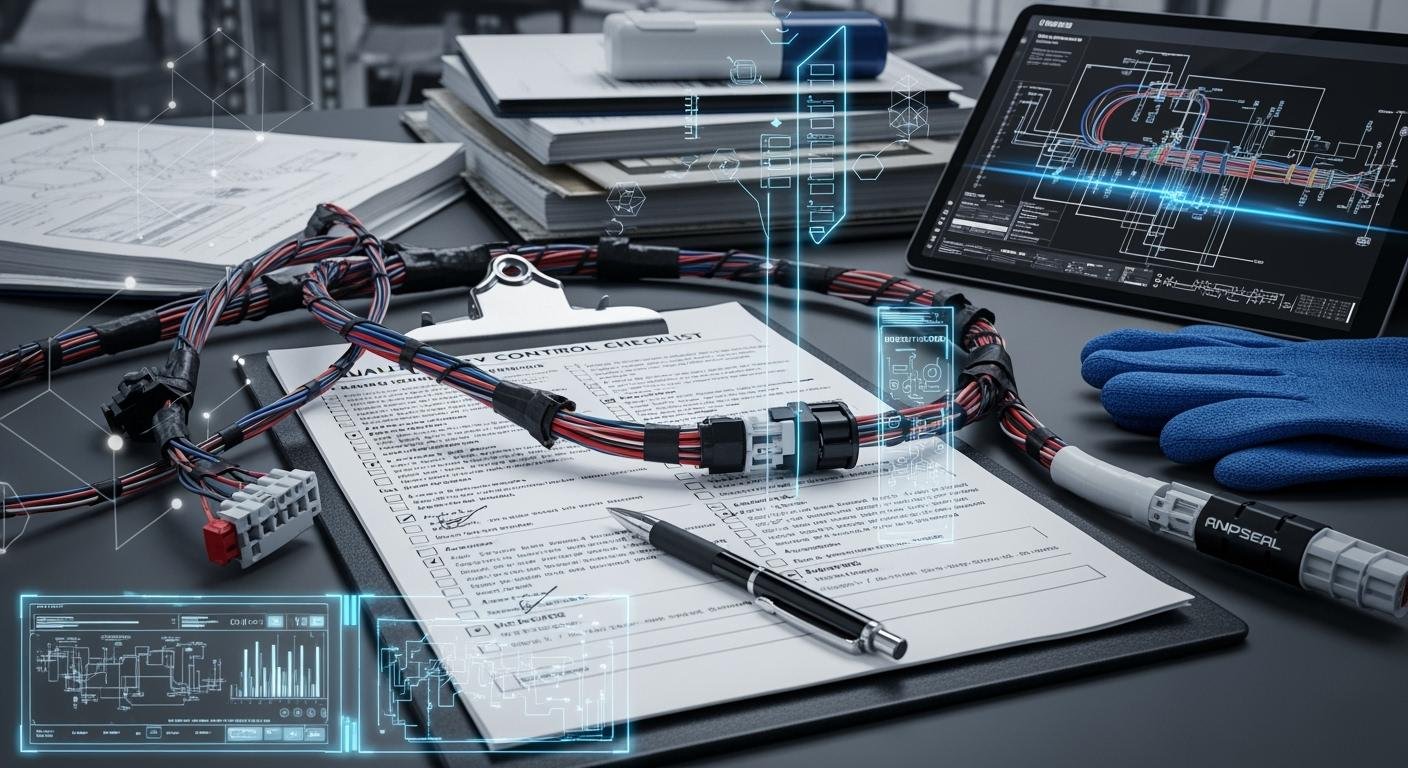
Lors de l'évaluation des fabricants de faisceaux de câbles, avoir un plan solide est essentiel. La liste de contrôle ultime garantit que vous vérifiez la sécurité et la haute qualité des produits.. Sauter des étapes lors des audits peut entraîner des problèmes ou des violations dans vos systèmes électriques. Les problèmes courants incluent certificats manquants, paperasse insuffisante, et des matériaux intraçables. Vous n'avez pas besoin d'être un expert pour utiliser la liste de contrôle ultime et identifier les problèmes dès le début.. Yueqing Chengli Electronic Technology Co., Ltd. respecte des normes très élevées en matière de qualité et de conformité des harnais.
Des audits minutieux vous font économiser de l'argent et contribuent au succès de vos projets.
Points clés à retenir
Utilisez une liste de contrôle claire pour effectuer des audits minutieux. Cela vous aide à détecter les problèmes plus tôt. Cela rend également le produit meilleur.
Vérifiez toujours les schémas de câblage et les nomenclatures en premier. Cette étape évite les pièces manquantes et les erreurs de conception.
Regarder certifications des fournisseurs comme l'IATF 16949 et ISO 9001. Ceux-ci montrent que le fabricant respecte les règles de sécurité et de qualité.
Utiliser des systèmes de traçabilité solides. Cela vous aide à trouver rapidement les problèmes. Cela facilite également les audits et renforce la confiance des clients..
Faire tests électriques et mécaniques réguliers sur les harnais. Ces tests garantissent que les produits sont sûrs et fonctionnent bien avant que les clients ne les reçoivent.
Pourquoi l'audit est important
Risques d’audits incomplets
Vous pensez peut-être que sauter les étapes d’audit fait gagner du temps. Mais manquer des étapes peut causer de gros problèmes. Si vous oubliez des chèques importants, vous ne verrez peut-être pas de mauvaises connexions du faisceau. Vous pourriez également manquer des pièces qui ne sont pas là. Cela peut provoquer une panne des systèmes électriques ou devenir dangereux. Ne pas effectuer un audit complet signifie que vous ne trouverez peut-être pas les certificats manquants. Vous risquez également de manquer des matériaux de mauvaise qualité. Sans une liste de contrôle claire, vous pourriez utiliser des harnais qui ne sont pas aux normes. Votre entreprise pourrait perdre de l'argent à cause des rappels ou nuire à sa réputation.
Conseil: Vérifiez toujours chaque étape de la liste de contrôle ultime afin de ne pas rencontrer de problèmes inattendus plus tard..
Avantages d'une liste de contrôle structurée
Une liste de contrôle structurée vous aide à rester sur la bonne voie pendant les audits. Vous pouvez vous assurer que chaque partie du harnais répond à vos besoins. Lorsque vous utilisez une liste de contrôle, toi:
Repérer les points lents et étapes répétées dans la fabrication des harnais.
Aider les membres de l'équipe à prendre en charge leurs tâches.
Créer un lieu de travail où les gens veulent s'améliorer.
Vous verrez moins d'erreurs et de meilleurs résultats avec une liste de contrôle pour chaque audit. Par ici, vous détectez les problèmes rapidement et les résolvez rapidement. Vous vous assurez également que votre fournisseur de harnais utilise les meilleures méthodes de l'industrie.. Des entreprises comme Yueqing Chengli Electronic Technology Co., Ltd. utilisez des listes de contrôle pour vous proposer de bons produits à chaque fois.
Liste de contrôle de conception
Examiner les schémas de câblage
Vous commencez chaque audit en examinant les schémas de câblage. Ces schémas montrent comment les fils se connectent à l'intérieur des faisceaux de câbles et de câbles.. Vous vérifiez les chemins clairs et les symboles corrects. Vous faites correspondre les schémas au véritable harnais. Vous vous assurez que tout est pareil. Vous vérifiez si la conception suit des normes importantes. Voici un tableau avec quelques groupes et leurs règles pour l'examen des schémas de câblage:
Norme/Organisation | Description |
|---|---|
Laboratoires souterrains (Ul) | Règles de sécurité pour l'Amérique du Nord. |
Association canadienne de normalisation (ASC) | Règles pour les faisceaux de câbles au Canada. |
Commission internationale pour les règles d'approbation des équipements électriques (CEE) | Lignes directrices pour l'approbation des équipements électriques. |
Commission électrotechnique internationale (CEI) | Règles internationales pour les technologies électriques. |
Comité européen de normalisation électrique (CENELEC) | Règles pour les équipements électriques en Europe. |
CIB/WHMA-A-620 | Référence pour l'assemblage de faisceaux de câbles aux États-Unis. |
Vous vous assurez que les schémas de câblage suivent ces règles. Vous vérifiez également les types de connecteurs, couleurs de fils, et à quel point les choses fonctionnent. Cette étape vous aide à détecter les erreurs dès le début de la conception des câbles et des faisceaux de câbles..
Vérification de la nomenclature
Suivant, vous vérifiez la nomenclature. Cette liste montre toutes les pièces utilisées dans la conception. Vous vous assurez que chaque fil, connecteur, et une partie correspond à la liste de contrôle. Vous recherchez des éléments manquants ou supplémentaires. Vous vérifiez si les matériaux répondent aux bonnes règles. Vous comparez la facture aux schémas électriques et au faisceau réel. Vous vous assurez que les câbles et faisceaux de câbles utilisent des pièces approuvées. Cette étape vous aide à éviter les problèmes liés aux pièces erronées ou manquantes.
Contrôles de gestion du changement
Vous avez besoin de contrôles stricts pour modifications de conception. Vous suivez chaque modification apportée à la conception des câbles et des faisceaux de câbles. Vous suivez les meilleures façons de maintenir votre processus fluide:
Commencer les étapes nécessaires pour chaque changement, donc vous suivez chaque partie.
Définir des flux de travail pour les retours, réparations, remplaçants, et remboursements. Cela rend les choses claires pour tout le monde.
Recueillir des données sur les changements, raisons, défauts, et les coûts. Vous utilisez ces données pour améliorer votre conception et votre production.
Vous conservez une trace de tous les changements. Vous vous assurez que chaque mise à jour suit la liste de contrôle. Cela vous aide à garder votre harnais sûr et fiable.
Conseil: Utilisez toujours la liste de contrôle de conception pour détecter les erreurs avant la production.
Matériel & Liste de contrôle des composants
Qualification des fournisseurs
D'abord, vous vérifiez si les fournisseurs suivent des règles strictes. You see if they have the right certificates. You want them to meet industry standards. Many companies want IPC/WHMA-A-620 certification. This means suppliers know wire harness assembly and process control. You also look at solder quality and crimp strength. You make sure you can trace each part. You ask if the supplier is new or replacing someone. You look at old suppliers and why you changed. You ask about talking with them, how fast they work, and what quality you expect. These steps help you stop wire harness problems and pick the best supplier.
IPC/WHMA-A-620 certification for harness work
Solder quality and crimp integrity
Testing requirements and traceability
New or replacement supplier status
Reasons for switching suppliers
Communication, lead times, and quality expectations
Material Inspection
You inspect materials to find problems before making products. Looking at parts is important for quality control. Inspectors check for cuts in insulation. They look at wire size and if terminals fit right. You use machines and checklists to spot issues. Le tableau ci-dessous montre common wire harness problems, why they happen, and how to find them:
Defect | Root Cause | Best Detection Method |
|---|---|---|
Wrong pin position | Human error during insertion | Automated continuity test |
Bad crimp | Tool wear, wrong setting | Cross-section + essai de traction |
Damaged insulation | Handling, routing, décapage | Visual + test hipot |
Terminal not fully seated | Insertion technique | Visual + retention force test |
Wrong wire | Material mix-up | Automated continuity + visual |
Missing component | Human error | Visual inspection checklist |
You follow these steps to meet rules and keep quality high. You also test for continuity and do first article checks. These actions help you find problems early and stop defects.
Component Certification
You check if every part meets safety and quality rules. You look for certificates like RoHS, ATTEINDRE, Ul, Et quoi. These show materials are safe and follow laws. You also check for waterproof and fire-proof certificates. For car harnesses, you want ISO 9001 et IATF16949. The table below lists common standards and where they are used:
Standard / Certification | Region / Scope | Notes |
|---|---|---|
Ul (par exemple. Ul 758) | USA | US safety standard for appliance wiring |
ASC (par exemple. C22.2) | Canada | Canadian standard, often seen as “cUL” mark |
CE Marking | EU/EEA | Mandatory for EU safety directives |
EN IEC 60335-1 | International / UE | Appliance wiring safety |
VDE (DIN VDE) | Germany / UE | German electrotechnical standard |
RoHS (2011/65/UE) | UE | Restricts hazardous substances |
CIB/WHMA-A-620 | International | Wire harness assembly qualité |
ISO 9001 | International | Quality management system |
You use the checklist to make sure every rule is met. This helps you stop defects and makes sure your harness is high quality.
Production Process Checklist
Assembly Procedures
You begin by checking how workers build wire harnesses. Workers need clear steps to follow. The checklist helps you find missing or unclear directions. Here is a usual order for making strong harnesses:
Decide if each harness is good or bad.
Do hands-on work like wire cutting and crimping.
Pick strong materials and good ways to build.
You see if workers use machines to cut and strip wires. You check if they fix crimping tools often. Wires should be tied and routed neatly. Soldering must follow J-STD-001 règles. Every harness gets checked and tested before it leaves the factory.
Conseil: Always use the checklist for each step to get better harnesses and fewer mistakes.
Operator Training
You look at how workers learn to make wire harnesses. Training programs like IPC/WHMA-A-620 teach workers the right way. You check if workers know how to use tools and read guides. Many companies have classes for different jobs. These classes help workers know what materials and steps to use. When workers finish training, they get certificates to show their skills. This helps stop mistakes and makes work faster.
Training follows industry rules.
Workers learn to use quality steps.
Certificates show their skills in making harnesses.
Process Controls
You check how the team controls each part of making harnesses. Good controls help stop mistakes and keep work smooth. You look for a checklist for checking harnesses. You see if the team trains quality control workers often. Many companies use numbers and charts to find problems early. You check if they watch things like temperature and humidity. These controls help find problems before harnesses go to customers.
Control Method | But |
|---|---|
Inspection checklist | Keeps harnesses made the same way |
QC personnel training | Helps find mistakes faster |
Statistical process control | Watches for problems in making harnesses |
You use these controls to make sure harnesses are safe and work well.
Wire Harness Testing
Wire harness testing is a very important part of your audit. You need to make sure each harness works safely. It must meet all electrical rules. You use different tests to check if the wire harness is strong. These tests show if each product is ready to use. Top companies like Yueqing Chengli Electronic Technology Co., Ltd. use special wire harness testing. This helps them make sure their products are good and reliable.
Electrical Testing Protocols
You begin with electrical testing. This step checks if the harness can carry electricity and stay safe. You use different ways to test each harness. The table below shows common electrical tests and what they do:
Méthode de test | But |
|---|---|
Confirms that all circuits are complete. | |
Short Circuit Testing | Detects unintended contact between conductors. |
High Voltage (Hi-Pot) Essai | Checks insulation integrity, especially in high-voltage applications. |
Resistance Testing | Checks joint quality and bonding between components. |
Contact Testing | Confirms connectors function under voltage and current loads. |
Impedance Testing | Measures impedance for consistent signal transmission. |
Continuity testing makes sure every wire connects the right way. High-voltage testing, or Hi-Pot, checks the insulation. It finds shorts between wires or to the ground. These tests help you find problems that normal voltage might miss. You also use resistance and contact testing. These check if joints and connectors work well. Impedance testing helps you see if signals move the same way every time.
Electrical performance testing checks if the harness meets the design. Insulation resistance testing shows how well the harness stops leaks. Contact resistance testing checks the resistance at connector ends. Each test helps you make sure the harness is safe and strong.
Mechanical Testing Methods
Mechanical testing checks if the harness is strong and tough. You want to know if it can bend, pull, and shake without breaking. The table below lists common mechanical tests, what they do, tools used, and how often to do them:
Méthode de test | But | Outils utilisés | Recommended Frequency |
|---|---|---|---|
Mechanical Fatigue Testing | Evaluate durability under mechanical stress. | Vibration testing bench, bending tester | Every two years based on usage environment |
Tensile Testing | Assess performance under tension. | Tensile testing instrument | Every two years based on usage environment |
Bending Testing | Evaluate durability under frequent bending. | Bending tester | Every two years based on usage environment |
Assess mechanical integrity of wire connections. | Specialized equipment | As needed based on application |
Pull force testing checks how hard it is to pull the wire out. This test shows if the harness is strong. It follows rules like IPC/WHMA-A-620, USCAR-21, and SAE AS7928. Each wire size has a minimum pull value you must reach. Crimp cross-section testing checks how much the crimp is squeezed. It should be between 17% et 24%. You use your eyes and check your tools to keep crimp quality high.
Visual Inspection Steps
Visual inspection is the last check before shipping. You look for things you can see that are wrong. You make sure every harness follows the best ways to build wire harnesses. Here are the main steps you follow:
Look for insulation that is damaged.
Check for crimps that are not right.
Make sure no wires are showing.
Look at wires and connectors to see if they are strong.
Check the protective cover.
Make sure wires are labeled, bundled, and routed right.
You use a magnifier to see small problems. You also check if labels are correct. This makes sure every wire and terminal has the right name. This step helps you meet customer needs and follow IPC/WHMA-A-620 rules.
Quality Assurance in Harness Testing
Quality assurance means you follow strict steps to check every harness. You use a Manufacturing Execution System (MES) to scan barcodes on wires and terminals. The MES makes sure you do crimp height and pull tests. It also keeps track of tool care. Each wire bundle gets a special code so you can trace it.
You check all labels and marks. You make sure every harness meets what the customer wants. Yueqing Chengli Electronic Technology Co., Ltd. uses these systems to give you good products. You can trust their wire harness testing to meet top standards for safety and quality.
Conseil: Always use a full wire harness testing checklist. This helps you find problems early and give safe, good harnesses every time.
Certifications & Conformité
Normes de l'industrie (IATF 16949, ISO 9001, Ul, CE)
You should check if your wire harness maker has certifications importantes. These show the company cares about safety and quality. If you see IATF 16949 et ISO 9001, it means they use strong quality checks. IATF 16949 is for car parts and helps keep things the same every time. ISO 9001 is for quality in all kinds of businesses. UL and CE marks mean products are safe in the U.S. and Europe. You should also look for CIB/WHMA-A-620. This standard is key for wire harnesses. It means the company builds harnesses carefully and the same way each time.
IATF 16949: For car part quality
ISO 9001: For general quality
Ul: NOUS. safety mark
CE: European safety mark
CIB/WHMA-A-620: For wire harness quality
Yueqing Chengli Electronic Technology Co., Ltd. has these certifications. You can trust their wire harnesses to work well and last long.
Environmental Compliance (RoHS, ATTEINDRE)
You need to make sure your wire harnesses are safe for people and nature. RoHS and REACH are two big rules. RoHS stops dangerous stuff from being used in wires. REACH checks for chemicals that can hurt people or the earth. The table below shows what each rule does:
Regulation | Requirements | Restricted Substances |
|---|---|---|
RoHS | Must follow RoHS rules and get RoHS 3 certificat | Lead, Cadmium, Mercury, Hexavalent chromium, PBB, PBDE, DEHP, BBP, DBP, DIBP |
ATTEINDRE | Check all materials for safety and watch SVHCs | Reproductive toxins, Mutagens, Carcinogens, Bioaccumulative chemicals, Persistent chemicals, Toxic chemicals |
Yueqing Chengli uses safe materials that follow these rules. Picking their harnesses helps keep the planet clean.
Traçabilité & Documentation
You need to be able to track every wire and part in your harness. Good tracking helps you find problems quickly. Top companies write down batch codes in their systems. They keep records for every step, from making to checking. Digital systems help you search and check information fast. You can see which worker made each harness and what materials they used. This keeps your supply chain safe and helps with audits.
Conseil: Always ask your wire harness supplier for full records and tracking reports.
Étiquetage & Packaging Checklist
Label Accuracy
You have to check every label on your wire harness. Labels help you put in and fix products easily. Each wire should say what it does and where it goes. This makes your job quicker and safer. You must follow rules like Ul, CIB/WHMA-A-620, ISO 9001, RoHS, and REACH. These rules make sure you follow the law and keep things safe. Picking the right way to label is important. The label should fit the harness size and how it will be used. Strong and clear labels last longer and are easy to read.
Labels need to meet safety and quality rules.
Every wire should have a label for its job and where it ends.
Pick labels that fit well and are easy to see.
Conseil: Always check labels twice before you send out harnesses. This helps stop mistakes and confusion when people install them.
Packaging Protection
You want your harness to get to you safe and not broken. Good packaging keeps wires and connectors in good shape. You can use trays or boxes made just for your harness. These stop the harness from moving around. Wrapping with bubble wrap or foam protects against bumps. Strong boxes help keep harnesses safe when shipping. Palletization lets you move and store many harnesses together. The table below shows ways to pack harnesses and why they are good:
Packaging Method | Description |
|---|---|
Custom-fit packaging | Stops harnesses from moving by using special trays or boxes. |
Protective wrapping | Uses bubble wrap, foam, or plastic to protect harnesses. |
Reinforced boxes | Makes boxes stronger for shipping. |
Palletization | Groups harnesses together for easy storage or moving. |
Note: Strong packaging keeps harnesses safe and saves money because you get fewer returns.
Traceability Systems
You need a way to track each harness from start to finish. Tracking helps you find problems fast and helps if you need to recall products. It also makes audits easier and helps customers trust you. The table below shows how tracking systems help you:
Avantage | Description |
|---|---|
Confidence in validated material | Makes sure harnesses in products are good and reliable. |
Simplified audits | Makes it faster to check and approve products. |
Clear traceability | Helps manage risks and makes recalls easier. |
Fewer post-sale failures | Lowers problems after selling and builds customer trust. |
Conseil: Use digital tools to keep track of harnesses and make records easy to find.
Installation & Service
Installation Instructions
You need easy steps to put in wire harnesses safely. D'abord, get the right tools. You will need wire strippers, crimping tools, connecteurs, and testers. Plan your work area before you start. Sort wires by what they do and their voltage. This helps stop wires from causing problems with each other. Follow these steps for a good installation:
Get your work area ready and look for anything unsafe.
Use wire strippers to take off the wire’s cover.
Use the right tool to crimp connectors on wire ends.
Hold wires in place so they do not move around.
Put wires where you can reach them and do not let them cross.
Add strain relief parts to keep wires safe from pulling.
Test every connection with your tester to find problems.
Fix common problems like loose wires or signal issues.
Keep wires apart and use strain relief so the harness lasts longer.
Service Documentation
You need clear papers to fix and care for wire harnesses. Manuals should have diagrams, lists of parts, and simple steps. These papers help you find and fix problems fast. You can see where each wire goes and what each connector does. Write down repairs and changes you make. Update your manuals when you make things better. This makes fixing things easier next time.
Conseil: Keep your service papers in a safe spot. You can use computer files to find them quickly.
Customer Support
You should get good help from your supplier. Good help lets you fix problems fast. Find a team that answers your questions and gives you tips. You can ask for help with putting in harnesses or fixing them. Good suppliers teach you and help with service papers. They listen to what you say and try to make things better. You get better results when you have help you can trust.
Note: Yueqing Chengli Electronic Technology Co., Ltd. gives expert help for all your wire harness needs.
Using the ultimate checklist makes harness audits better. When you follow the same steps, you find problems early. You can compare your work to top companies like Yueqing Chengli Electronic Technology Co., Ltd. Put the checklist in your supplier checks for good results. Change each step so it works for your business.
Always check everything in each audit
Make sure harnesses are safe and people trust them
FAQ
What should you check first when auditing a wire harness manufacturer?
Begin by looking at wiring diagrams and the bill of materials. These steps help you find missing parts or mistakes early. You can stop problems before making the harness.
How do you know if a wire harness meets quality standards?
Vérifiez certifications like IATF 16949, ISO 9001, Ul, Et quoi. These show the manufacturer follows important rules. Harnesses with these marks are safe and work well.
Why is traceability important in wire harness audits?
Traceability helps you follow every wire and part. You can find problems fast and handle recalls. Good records make audits simple and help customers trust you.
What tests should you expect during wire harness inspection?
You should see electrical tests like continuity and high-voltage checks. Mechanical tests include pull force and crimp cross-section. Visual checks find damage or label mistakes.