A lista de verificação definitiva para auditar um fabricante de chicotes elétricos
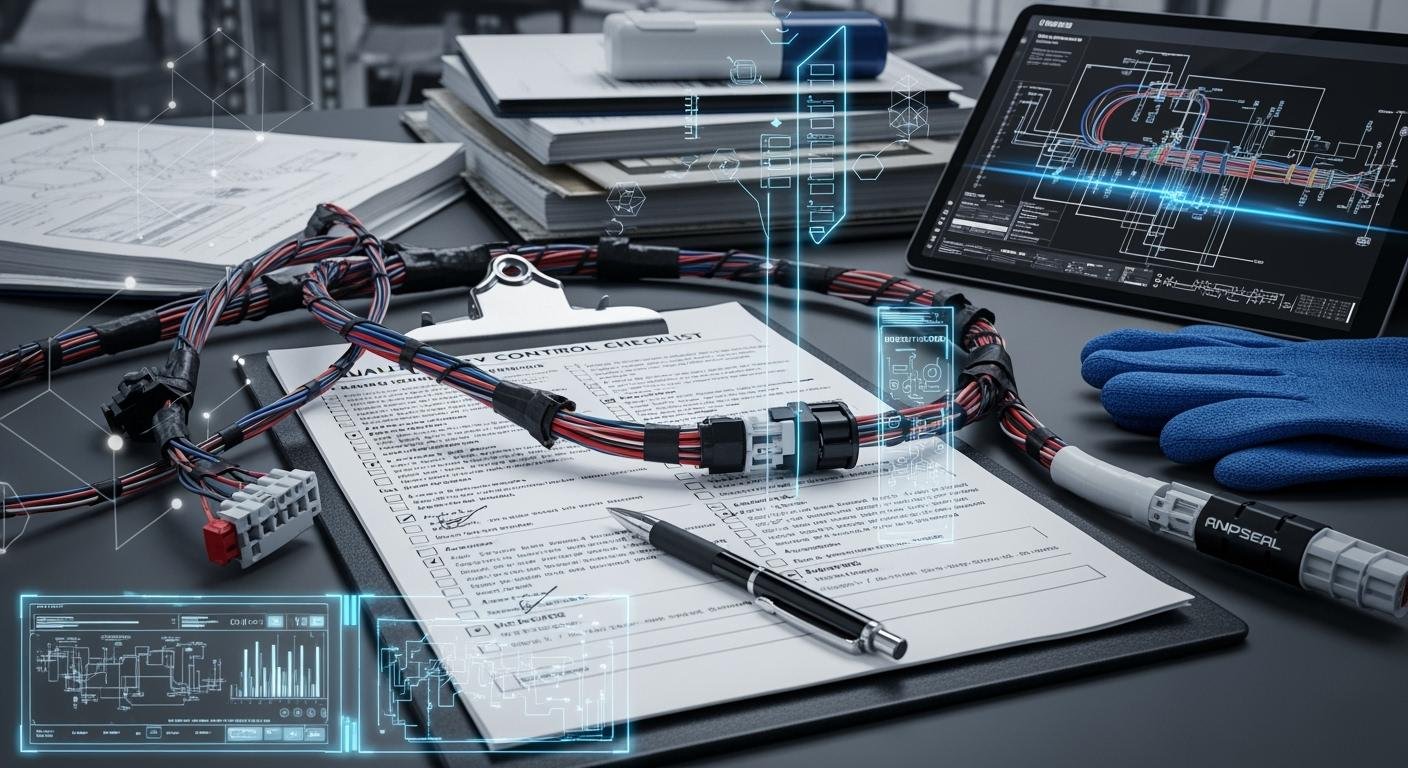
Ao avaliar fabricantes de chicotes de fios, ter um plano sólido é essencial. A lista de verificação final garante que você verifique os produtos quanto à segurança e alta qualidade. Ignorar etapas durante as auditorias pode levar a problemas ou violações em seus sistemas elétricos. Problemas comuns incluem certificados ausentes, papelada inadequada, e materiais não rastreáveis. Você não precisa ser um especialista para utilizar a Lista de Verificação Definitiva e identificar problemas desde o início. Yueqing Chengli Electronic Technology Co., Ltd. mantém padrões muito elevados de qualidade e conformidade do arnês.
Auditorias cuidadosas economizam dinheiro e contribuem para o sucesso de seus projetos.
Principais conclusões
Use uma lista de verificação clara para fazer auditorias cuidadosas. Isso ajuda você a encontrar problemas antecipadamente. Também torna o produto melhor.
Sempre verifique primeiro os diagramas de fiação e as listas de materiais. Esta etapa evita a falta de peças e erros de design.
Olhe para certificações de fornecedores como IATF 16949 e ISO 9001. Isso mostra que o fabricante segue as regras de segurança e qualidade.
Use sistemas de rastreabilidade fortes. Isso ajuda você a encontrar problemas rapidamente. Também facilita as auditorias e constrói a confiança do cliente.
Fazer testes elétricos e mecânicos regulares em arreios. Esses testes garantem que os produtos sejam seguros e funcionem bem antes que os clientes os recebam.
Por que a auditoria é importante
Riscos de auditorias incompletas
Você pode pensar que pular etapas de auditoria economiza tempo. Mas perder etapas pode causar grandes problemas. Se você esquecer verificações importantes, você pode não ver conexões de chicote ruins. Você também pode perder partes que não estão lá. Isso pode fazer com que os sistemas elétricos falhem ou se tornem inseguros. Não fazer uma auditoria completa significa que você pode não encontrar certificados ausentes. Você também pode perder materiais de baixa qualidade. Sem uma lista de verificação clara, você pode usar arneses que não atendem ao padrão. Sua empresa pode perder dinheiro com recalls ou prejudicar sua reputação.
Dica: Sempre verifique cada etapa da lista de verificação final para não ter problemas inesperados posteriormente.
Benefícios de uma lista de verificação estruturada
Uma lista de verificação estruturada ajuda você a manter o controle durante as auditorias. Você pode garantir que cada peça do arnês atenda às suas necessidades. Quando você usa uma lista de verificação, você:
Identifique pontos lentos e etapas repetidas na fabricação de arreios.
Ajude os membros da equipe a assumir o controle de suas tarefas.
Construa um local de trabalho onde as pessoas queiram melhorar.
Você verá menos erros e melhores resultados com uma lista de verificação para cada auditoria. Por aqui, você encontra problemas cedo e os corrige rapidamente. Você também garante que seu fornecedor de chicotes use os melhores métodos da indústria. Empresas como Yueqing Chengli Electronic Technology Co., Ltd. use listas de verificação para oferecer sempre bons produtos.
Lista de verificação de projeto
Revise os diagramas de fiação
Você começa cada auditoria observando os diagramas de fiação. Estes diagramas mostram como os fios se conectam dentro dos cabos e chicotes elétricos. Você verifica caminhos claros e símbolos corretos. Você combina os diagramas com o chicote real. Você garante que tudo esteja igual. Você verifica se o design segue padrões importantes. Aqui está uma tabela com alguns grupos e suas regras para revisão do diagrama de fiação:
Padrão/Organização | Descrição |
|---|---|
Laboratórios de Subscritores (Ul) | Regras de segurança para a América do Norte. |
Associação Canadense de Padrões (CSA) | Regras para chicotes elétricos no Canadá. |
Comissão Internacional para Regras para Aprovação de Equipamentos Elétricos (CEE) | Diretrizes para aprovação de equipamentos elétricos. |
Comissão Eletrotécnica Internacional (CEI) | Regras internacionais para tecnologias elétricas. |
Comité Europeu de Normalização Elétrica (CENELEC) | Regras para equipamentos elétricos na Europa. |
IPC/WHMA-A-620 | Referência para montagem de chicotes de fios nos EUA. |
Certifique-se de que os diagramas de fiação sigam estas regras. Você também verifica os tipos de conectores, cores dos fios, e como as coisas funcionam bem. Esta etapa ajuda você a encontrar erros no início do projeto do chicote de cabos e fios.
Verificação da lista de materiais
Próximo, você verifica a lista de materiais. Esta lista mostra todas as peças usadas no design. Você se certifica de que cada fio, conector, e parte corresponde à lista de verificação. Você procura itens faltantes ou extras. Você verifica se os materiais atendem às regras corretas. Você compara a conta com os diagramas de fiação e o chicote real. Certifique-se de que os cabos e chicotes elétricos usem peças aprovadas. Esta etapa ajuda a evitar problemas com peças erradas ou faltantes.
Controles de gerenciamento de mudanças
Você precisa de controles fortes para mudanças de design. Você rastreia todas as alterações no projeto do chicote de cabos e fios. Você segue as melhores maneiras de manter seu processo tranquilo:
Inicie as etapas necessárias para cada mudança, então você acompanha cada parte.
Defina fluxos de trabalho para devoluções, reparos, substituições, e reembolsos. Isso deixa as coisas claras para todos.
Colete dados sobre mudanças, razões, defeitos, e custos. Você usa esses dados para melhorar seu design e produção.
Você mantém registros de todas as alterações. Você garante que cada atualização siga a lista de verificação. Isso ajuda você a manter seu arnês seguro e confiável.
Dica: Sempre use a lista de verificação de projeto para encontrar erros antes da produção.
Material & Lista de verificação de componentes
Qualificação de Fornecedores
Primeiro, você verifica se os fornecedores seguem regras rígidas. Você vê se eles têm os certificados certos. Você deseja que eles atendam aos padrões da indústria. Muitas empresas querem IPC/WHMA-A-620 certification. This means suppliers know wire harness assembly and process control. You also look at solder quality and crimp strength. You make sure you can trace each part. You ask if the supplier is new or replacing someone. You look at old suppliers and why you changed. You ask about talking with them, how fast they work, and what quality you expect. These steps help you stop wire harness problems and pick the best supplier.
IPC/WHMA-A-620 certification for harness work
Solder quality and crimp integrity
Testing requirements and traceability
New or replacement supplier status
Reasons for switching suppliers
Communication, lead times, and quality expectations
Material Inspection
You inspect materials to find problems before making products. Looking at parts is important for quality control. Inspectors check for cuts in insulation. They look at wire size and if terminals fit right. You use machines and checklists to spot issues. A tabela abaixo mostra common wire harness problems, why they happen, and how to find them:
Defect | Root Cause | Best Detection Method |
|---|---|---|
Wrong pin position | Human error during insertion | Automated continuity test |
Bad crimp | Tool wear, wrong setting | Cross-section + teste de tração |
Damaged insulation | Handling, roteamento, stripping | Visual + hipot test |
Terminal not fully seated | Insertion technique | Visual + retention force test |
Wrong wire | Material mix-up | Automated continuity + visual |
Missing component | Human error | Visual inspection checklist |
You follow these steps to meet rules and keep quality high. You also test for continuity and do first article checks. These actions help you find problems early and stop defects.
Component Certification
You check if every part meets safety and quality rules. You look for certificates like RoHS, ALCANÇAR, Ul, e o que. These show materials are safe and follow laws. You also check for waterproof and fire-proof certificates. For car harnesses, you want ISO 9001 e IATF16949. The table below lists common standards and where they are used:
Padrão / Certificação | Região / Escopo | Notes |
|---|---|---|
Ul (e.g. Ul 758) | EUA | US safety standard for appliance wiring |
CSA (e.g. C22.2) | Canadá | Canadian standard, often seen as “cUL” mark |
CE Marking | EU/EEA | Mandatory for EU safety directives |
EN IEC 60335-1 | International / UE | Appliance wiring safety |
VDE (DIN VDE) | Alemanha / UE | German electrotechnical standard |
RoHS (2011/65/UE) | UE | Restricts hazardous substances |
IPC/WHMA-A-620 | International | Wire harness assembly qualidade |
ISO 9001 | International | Quality management system |
You use the checklist to make sure every rule is met. This helps you stop defects and makes sure your harness is high quality.
Production Process Checklist
Assembly Procedures
You begin by checking how workers build wire harnesses. Workers need clear steps to follow. The checklist helps you find missing or unclear directions. Here is a usual order for making strong harnesses:
Decide if each harness is good or bad.
Do hands-on work like wire cutting and crimping.
Pick strong materials and good ways to build.
You see if workers use machines to cut and strip wires. You check if they fix crimping tools often. Wires should be tied and routed neatly. Soldering must follow J-STD-001 regras. Every harness gets checked and tested before it leaves the factory.
Dica: Always use the checklist for each step to get better harnesses and fewer mistakes.
Operator Training
You look at how workers learn to make wire harnesses. Training programs like IPC/WHMA-A-620 teach workers the right way. You check if workers know how to use tools and read guides. Many companies have classes for different jobs. These classes help workers know what materials and steps to use. When workers finish training, they get certificates to show their skills. This helps stop mistakes and makes work faster.
Training follows industry rules.
Workers learn to use quality steps.
Certificates show their skills in making harnesses.
Process Controls
You check how the team controls each part of making harnesses. Good controls help stop mistakes and keep work smooth. You look for a checklist for checking harnesses. You see if the team trains quality control workers often. Many companies use numbers and charts to find problems early. You check if they watch things like temperature and humidity. These controls help find problems before harnesses go to customers.
Control Method | Propósito |
|---|---|
Inspection checklist | Keeps harnesses made the same way |
QC personnel training | Helps find mistakes faster |
Statistical process control | Watches for problems in making harnesses |
You use these controls to make sure harnesses are safe and work well.
Wire Harness Testing
Wire harness testing is a very important part of your audit. You need to make sure each harness works safely. It must meet all electrical rules. You use different tests to check if the wire harness is strong. These tests show if each product is ready to use. Principais empresas como Yueqing Chengli Electronic Technology Co., Ltd. use special wire harness testing. This helps them make sure their products are good and reliable.
Electrical Testing Protocols
You begin with electrical testing. This step checks if the harness can carry electricity and stay safe. You use different ways to test each harness. The table below shows common electrical tests and what they do:
Método de teste | Propósito |
|---|---|
Confirms that all circuits are complete. | |
Short Circuit Testing | Detects unintended contact between conductors. |
Alta tensão (Hi-Pot) Teste | Checks insulation integrity, especially in high-voltage applications. |
Resistance Testing | Checks joint quality and bonding between components. |
Teste de contato | Confirms connectors function under voltage and current loads. |
Impedance Testing | Measures impedance for consistent signal transmission. |
Continuity testing makes sure every wire connects the right way. High-voltage testing, or Hi-Pot, checks the insulation. It finds shorts between wires or to the ground. These tests help you find problems that normal voltage might miss. You also use resistance and contact testing. These check if joints and connectors work well. Impedance testing helps you see if signals move the same way every time.
Electrical performance testing checks if the harness meets the design. Insulation resistance testing shows how well the harness stops leaks. Contact resistance testing checks the resistance at connector ends. Each test helps you make sure the harness is safe and strong.
Mechanical Testing Methods
Mechanical testing checks if the harness is strong and tough. You want to know if it can bend, pull, and shake without breaking. The table below lists common mechanical tests, what they do, tools used, and how often to do them:
Método de teste | Propósito | Ferramentas usadas | Recommended Frequency |
|---|---|---|---|
Mechanical Fatigue Testing | Evaluate durability under mechanical stress. | Vibration testing bench, bending tester | Every two years based on usage environment |
Tensile Testing | Assess performance under tension. | Tensile testing instrument | Every two years based on usage environment |
Bending Testing | Evaluate durability under frequent bending. | Bending tester | Every two years based on usage environment |
Assess mechanical integrity of wire connections. | Specialized equipment | As needed based on application |
Pull force testing checks how hard it is to pull the wire out. This test shows if the harness is strong. It follows rules like IPC/WHMA-A-620, USCAR-21, and SAE AS7928. Each wire size has a minimum pull value you must reach. Crimp cross-section testing checks how much the crimp is squeezed. It should be between 17% e 24%. You use your eyes and check your tools to keep crimp quality high.
Visual Inspection Steps
Visual inspection is the last check before shipping. You look for things you can see that are wrong. You make sure every harness follows the best ways to build wire harnesses. Here are the main steps you follow:
Look for insulation that is damaged.
Check for crimps that are not right.
Make sure no wires are showing.
Look at wires and connectors to see if they are strong.
Check the protective cover.
Make sure wires are labeled, bundled, and routed right.
You use a magnifier to see small problems. You also check if labels are correct. This makes sure every wire and terminal has the right name. This step helps you meet customer needs and follow IPC/WHMA-A-620 rules.
Quality Assurance in Harness Testing
Quality assurance means you follow strict steps to check every harness. You use a Manufacturing Execution System (MES) to scan barcodes on wires and terminals. The MES makes sure you do crimp height and pull tests. It also keeps track of tool care. Each wire bundle gets a special code so you can trace it.
You check all labels and marks. You make sure every harness meets what the customer wants. Yueqing Chengli Electronic Technology Co., Ltd. uses these systems to give you good products. You can trust their wire harness testing to meet top standards for safety and quality.
Dica: Always use a full wire harness testing checklist. This helps you find problems early and give safe, good harnesses every time.
Certificações & Conformidade
Industry Standards (IATF 16949, ISO 9001, Ul, CE)
You should check if your wire harness maker has important certifications. These show the company cares about safety and quality. If you see IATF 16949 e ISO 9001, it means they use strong quality checks. IATF 16949 is for car parts and helps keep things the same every time. ISO 9001 is for quality in all kinds of businesses. UL and CE marks mean products are safe in the U.S. and Europe. You should also look for IPC/WHMA-A-620. This standard is key for wire harnesses. It means the company builds harnesses carefully and the same way each time.
IATF 16949: For car part quality
ISO 9001: For general quality
Ul: NÓS. safety mark
CE: European safety mark
IPC/WHMA-A-620: For wire harness quality
Yueqing Chengli Electronic Technology Co., Ltd. has these certifications. You can trust their wire harnesses to work well and last long.
Environmental Compliance (RoHS, ALCANÇAR)
You need to make sure your wire harnesses are safe for people and nature. RoHS and REACH are two big rules. RoHS stops dangerous stuff from being used in wires. REACH checks for chemicals that can hurt people or the earth. The table below shows what each rule does:
Regulation | Requirements | Restricted Substances |
|---|---|---|
RoHS | Must follow RoHS rules and get RoHS 3 certificado | Lead, Cadmium, Mercury, Hexavalent chromium, PBB, PBDE, DEHP, BBP, DBP, DIBP |
ALCANÇAR | Check all materials for safety and watch SVHCs | Reproductive toxins, Mutagens, Carcinogens, Bioaccumulative chemicals, Persistent chemicals, Toxic chemicals |
Yueqing Chengli uses safe materials that follow these rules. Picking their harnesses helps keep the planet clean.
Traceability & Documentação
You need to be able to track every wire and part in your harness. Good tracking helps you find problems quickly. Top companies write down batch codes in their systems. They keep records for every step, from making to checking. Digital systems help you search and check information fast. You can see which worker made each harness and what materials they used. This keeps your supply chain safe and helps with audits.
Dica: Always ask your wire harness supplier for full records and tracking reports.
Rotulagem & Packaging Checklist
Label Accuracy
You have to check every label on your wire harness. Labels help you put in and fix products easily. Each wire should say what it does and where it goes. This makes your job quicker and safer. You must follow rules like Ul, IPC/WHMA-A-620, ISO 9001, RoHS, and REACH. These rules make sure you follow the law and keep things safe. Picking the right way to label is important. The label should fit the harness size and how it will be used. Strong and clear labels last longer and are easy to read.
Labels need to meet safety and quality rules.
Every wire should have a label for its job and where it ends.
Pick labels that fit well and are easy to see.
Dica: Always check labels twice before you send out harnesses. This helps stop mistakes and confusion when people install them.
Packaging Protection
You want your harness to get to you safe and not broken. Good packaging keeps wires and connectors in good shape. You can use trays or boxes made just for your harness. These stop the harness from moving around. Wrapping with bubble wrap or foam protects against bumps. Strong boxes help keep harnesses safe when shipping. Palletization lets you move and store many harnesses together. The table below shows ways to pack harnesses and why they are good:
Packaging Method | Descrição |
|---|---|
Custom-fit packaging | Stops harnesses from moving by using special trays or boxes. |
Protective wrapping | Uses bubble wrap, foam, or plastic to protect harnesses. |
Reinforced boxes | Makes boxes stronger for shipping. |
Palletization | Groups harnesses together for easy storage or moving. |
Observação: Strong packaging keeps harnesses safe and saves money because you get fewer returns.
Traceability Systems
You need a way to track each harness from start to finish. Tracking helps you find problems fast and helps if you need to recall products. It also makes audits easier and helps customers trust you. The table below shows how tracking systems help you:
Beneficiar | Descrição |
|---|---|
Confidence in validated material | Makes sure harnesses in products are good and reliable. |
Simplified audits | Makes it faster to check and approve products. |
Clear traceability | Helps manage risks and makes recalls easier. |
Fewer post-sale failures | Lowers problems after selling and builds customer trust. |
Dica: Use digital tools to keep track of harnesses and make records easy to find.
Instalação & Service
Installation Instructions
You need easy steps to put in wire harnesses safely. Primeiro, get the right tools. You will need wire strippers, crimping tools, conectores, and testers. Plan your work area before you start. Sort wires by what they do and their voltage. This helps stop wires from causing problems with each other. Follow these steps for a good installation:
Get your work area ready and look for anything unsafe.
Use wire strippers to take off the wire’s cover.
Use the right tool to crimp connectors on wire ends.
Hold wires in place so they do not move around.
Put wires where you can reach them and do not let them cross.
Add strain relief parts to keep wires safe from pulling.
Test every connection with your tester to find problems.
Fix common problems like loose wires or signal issues.
Keep wires apart and use strain relief so the harness lasts longer.
Service Documentation
You need clear papers to fix and care for wire harnesses. Manuals should have diagrams, lists of parts, and simple steps. These papers help you find and fix problems fast. You can see where each wire goes and what each connector does. Write down repairs and changes you make. Update your manuals when you make things better. This makes fixing things easier next time.
Dica: Keep your service papers in a safe spot. You can use computer files to find them quickly.
Customer Support
You should get good help from your supplier. Good help lets you fix problems fast. Find a team that answers your questions and gives you tips. You can ask for help with putting in harnesses or fixing them. Good suppliers teach you and help with service papers. They listen to what you say and try to make things better. You get better results when you have help you can trust.
Observação: Yueqing Chengli Electronic Technology Co., Ltd. gives expert help for all your wire harness needs.
Using the ultimate checklist makes harness audits better. When you follow the same steps, you find problems early. You can compare your work to top companies like Yueqing Chengli Electronic Technology Co., Ltd. Put the checklist in your supplier checks for good results. Change each step so it works for your business.
Always check everything in each audit
Make sure harnesses are safe and people trust them
Perguntas frequentes
What should you check first when auditing a wire harness manufacturer?
Begin by looking at wiring diagrams and the bill of materials. These steps help you find missing parts or mistakes early. You can stop problems before making the harness.
How do you know if a wire harness meets quality standards?
Verifique se há certifications like IATF 16949, ISO 9001, Ul, e o que. These show the manufacturer follows important rules. Harnesses with these marks are safe and work well.
Why is traceability important in wire harness audits?
Traceability helps you follow every wire and part. You can find problems fast and handle recalls. Good records make audits simple and help customers trust you.
What tests should you expect during wire harness inspection?
You should see electrical tests like continuity and high-voltage checks. Mechanical tests include pull force and crimp cross-section. Visual checks find damage or label mistakes.