Open Barrel vs Closed Barrel Terminals: 5 Critical Selection Checks
When selecting terminals for custom wiring assemblies, evaluating open barrel vs closed barrel terminals is essential for balancing mechanical durability, tooling investment, and high-volume consistency. An incorrect terminal barrel geometry can lead to terminal pullback, loose contact, or insulation cracking during assembly.
What Are the Core Differences in Open Barrel vs Closed Barrel Terminals?
Open barrel contacts feature U-shaped or V-shaped crimp wings designed to fold tightly around conductor strands and wire insulation. In contrast, closed barrel terminals have a solid cylindrical sleeve where stripped conductors are inserted before crimping.
These geometric differences dictate how deformation occurs under crimping pressure. Open barrel terminals allow separate inspection of wire and insulation crimp zones, whereas closed barrel terminals rely on precision die compression around a solid circumference.
How Does Tooling Compare for Open Barrel vs Closed Barrel Terminals?
Open barrel terminals are widely supplied on continuous reels, making them the standard choice for automated cut, strip, and crimp machines. Automated applicators form the characteristic F-crimp or B-crimp with high repeatability at high production speeds.
Closed barrel terminals are frequently supplied as loose-piece contacts or heavy-duty lugs for industrial and power applications. They generally require specialized indent, hex, or four-point crimp tooling, which is well-suited for manual assembly or custom field wiring.
For official workmanship standards, engineers should consult the WHMA overview of IPC/WHMA-A-620. This reference provides clear acceptance criteria for conductor positioning, insulation clearance, and crimp deformation across both barrel geometries.
Which Terminal Performs Better in High-Vibration Environments?
In dynamic automotive and industrial machinery applications, mechanical stress at the terminal transition point can cause strand fatigue. Open barrel terminals provide superior strain relief because their dedicated rear wings grip the wire insulation directly.
Closed barrel terminals deliver excellent retention in heavy power cables and solid-pin connector housings where cable movement is restrained. However, uninsulated closed barrel contacts may require additional heat-shrink tubing to protect against conductor flexing.
To optimize cable flexibility, compare our wire harness bend radius guide and review our wire harness strain relief guide before finalizing your terminal selection. Proper physical routing ensures that dynamic flexing does not translate into terminal contact fatigue.
How Do You Inspect Open Barrel vs Closed Barrel Terminals?
Quality control methods vary significantly between the two styles. With open barrel designs, quality inspectors can visually verify the front wire brush, rear conductor gap, and bellmouth radius through standardized cross-section analysis.
With closed barrel terminals, visual inspection of the internal wire strands is limited once crimping is finished. As a result, manufacturing teams rely heavily on calibrated pull-force testers and precision crimp dimension gauges to ensure bond integrity.
For a detailed breakdown of crimp height measurements and testing protocols, explore our wire harness crimping process guide and check our wire harness terminal types guide. These technical references help your engineering team establish clear pull-force acceptance thresholds.
How Does Yueqing Chengli Ensure Terminal Crimp Quality?
At Yueqing Chengli Electronic Technology Co., Ltd., we configure automated applicators and precision crimp force monitors for all customer-specified terminal brands. Every production lot undergoes rigorous first-article pull testing and dimensional inspection to prevent field failures.
Our manufacturing facility produces custom wiring harnesses for automotive, home appliance, new energy, and industrial machinery sectors. We maintain strict quality management aligned with ISO 9001, IATF 16949, UL, CE, RoHS, and REACH international standards.
When sourcing custom cable assemblies, our engineering team assists you in selecting the ideal terminal family, wire gauge, and connector housing to match your project budget and performance requirements. We review your full harness bill of materials to eliminate component mismatch before tooling setup.
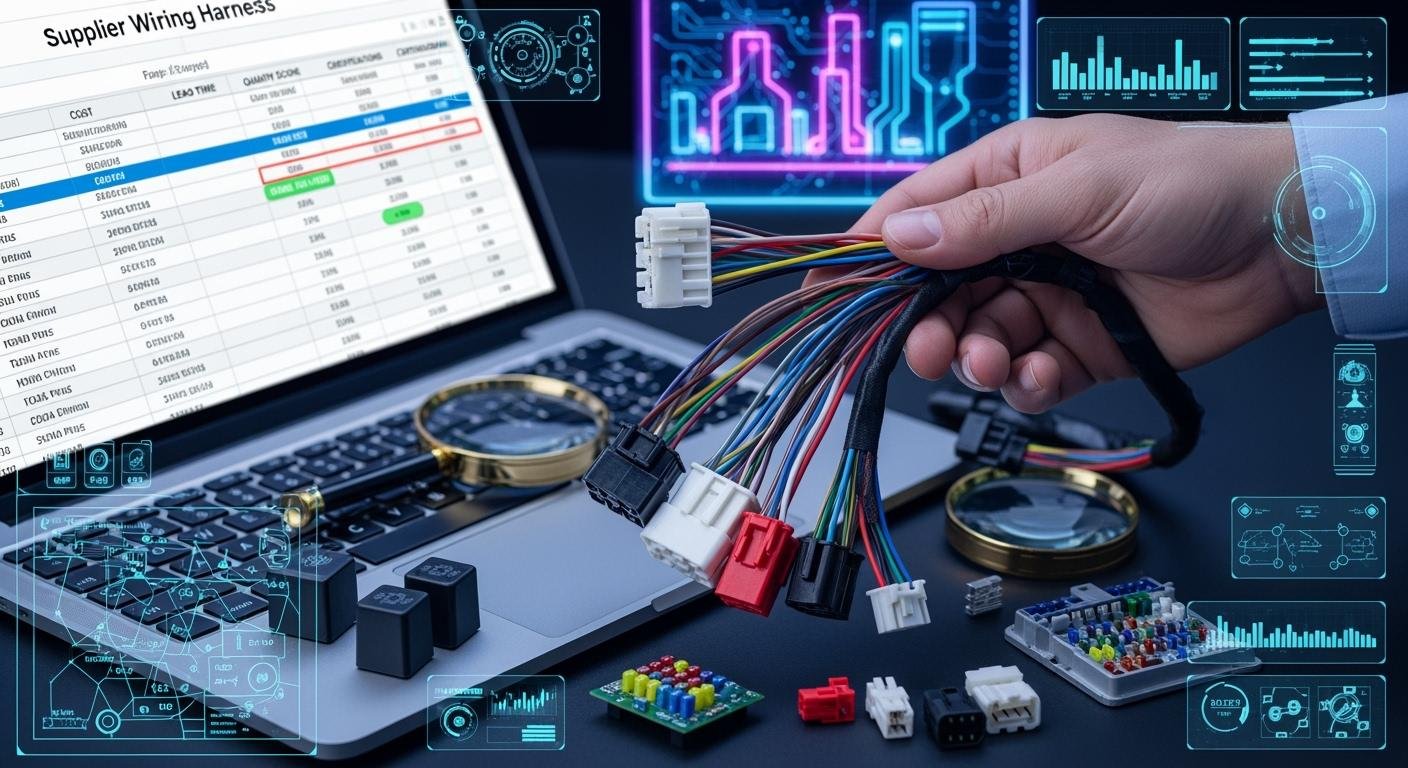
Supplier Audit Checklist: 5 Terminal Verification Records to Request
- Terminal manufacturer datasheet: verifies genuine contact part numbers, plating specifications, and approved wire range.
- Crimp height and width validation chart: documents calibrated micrometer dimensions for specific conductor sizes.
- Terminal retention pull-test report: demonstrates mechanical tensile strength meeting or exceeding IPC/WHMA-A-620 standards.
- Cross-section micro-graph analysis: verifies conductor compaction and zero strand voids inside the crimped barrel.
- Applicator calibration log: confirms regular maintenance and tooling wear checks on automated crimping lines.
Open Barrel vs Closed Barrel Terminals FAQ
Q: Can open barrel terminals be crimped with hand tools?
Yes, dedicated ratcheting hand tools with matching die profiles can crimp open barrel terminals effectively for prototyping. However, high-volume manufacturing requires automated applicators to maintain consistent crimp height and pull force.
Q: Are closed barrel terminals always more durable than open barrel terminals?
Not necessarily. Closed barrel terminals excel in heavy gauge power connections, but open barrel terminals often provide superior vibration resistance in multi-pin signal harnesses due to integrated insulation support wings.
Q: How do I choose between open barrel and closed barrel for my project?
Consider your production volume, connector housing constraints, vibration levels, and conductor sizes. Our engineering team can review your 2D drawings and BOM to recommend the most reliable terminal configuration.
For professional engineering guidance on open barrel vs closed barrel terminals, contact Yueqing Chengli Electronic Technology Co., Ltd. at chl0002@yqchlidz.com or via WhatsApp +44 7835 413019.