Automotive Harness Connector Sealing: 5 Vital Ingress Protection Checks
Ensuring robust automotive harness connector sealing is vital for protecting vehicle electrical systems against water immersion, salt spray, engine fluids, and high-pressure washdown. When moisture penetrates a connector housing, rapid galvanic corrosion and intermittent short circuits quickly follow.
What Are the Primary Automotive Harness Connector Sealing Technologies?
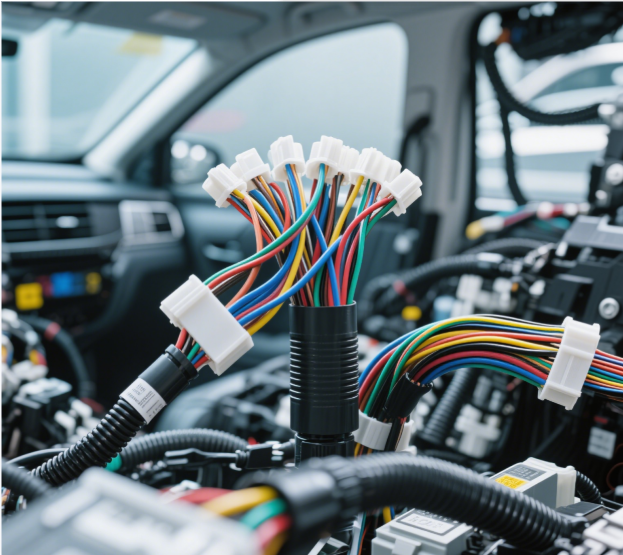
Modern automotive electrical architectures rely on two primary sealing methods: individual single wire seals (SWS) and integrated mat seals. Single wire seals are crimped directly around each insulated wire conductor, making them ideal for high-vibration engine compartments.
In high-density header connectors, multi-cavity silicone mat seals provide a unified barrier across all contact channels. In addition, perimeter interface radial seals prevent water from bypassing the housing shroud when male and female halves mate.
Which Ingress Protection (IP) Ratings Apply to Automotive Harnesses?
Automotive under-hood and chassis harnesses typically require IP67 or IP68 ratings to withstand temporary or prolonged water submersion during driving. Exterior sensors, headlight assemblies, and undercarriage modules frequently require IP69K ratings to endure high-pressure steam cleaning.
Achieving these stringent ingress protection levels requires absolute dimensional alignment between wire insulation outside diameters and silicone seal inner ribs. Using undersized wire insulation creates microscopic leak paths that capillary action pulls into the contact chamber.
For international quality system benchmarks, manufacturers align their process verification with the ISO 9001 quality management framework. This structured approach ensures repeatable assembly standards across all automated sealing and testing operations.
How Do CPA and TPA Locks Guarantee Connector Seal Integrity?
Terminal Position Assurance (TPA) secondary locks ensure that crimped terminals are seated completely forward before the connector is locked. If a terminal is partially inserted, the TPA will not close, preventing deformed seals and loose contact pins.
Connector Position Assurance (CPA) clips provide a secondary mechanical latch that prevents mating halves from backing out under severe road vibration. This dual-locking mechanism maintains constant compression on the perimeter silicone interface seal throughout the vehicle lifespan.
To understand connector housing geometries in detail, explore our wire harness connector types guide and review our wire harness manufacturing defects guide to eliminate common assembly errors. Matching housing lock features with compatible terminals guarantees continuous seal retention.
How Are Sealed Automotive Connectors Tested for Ingress Protection?
Automated production lines utilize differential pressure decay air leak testing to verify the hermetic seal of every connector assembly. Test fixtures seal the connector face, apply controlled air pressure, and measure micro-bar pressure drops over a calibrated dwell time.
Unpopulated cavities must always be fitted with dedicated dummy cavity plugs to prevent moisture intrusion through empty pin locations. Visual inspection cameras and optical sensors verify that all cavity plugs and wire seals are oriented correctly before final tape wrapping.
For complete electrical inspection workflows, consult our wire harness quality inspection guide to see how leak testing integrates with automated electrical test boards. Combining physical seal verification with continuity checks ensures flawless harness delivery.
How Does Yueqing Chengli Ensure Zero-Leakage Performance?
At Yueqing Chengli Electronic Technology Co., Ltd., we utilize automated seal-loading applicators that position single wire seals with micron-level precision during terminal crimping. Our customized assembly boards incorporate optical sensors and digital pressure decay testing for 100% leak-proof verification.
Our manufacturing facility produces custom wiring harnesses for automotive, commercial vehicle, new energy, and industrial machinery sectors. We maintain strict quality management aligned with ISO 9001, IATF 16949, UL, CE, RoHS, and REACH international standards.
Whether you require IP67 sealed powertrain harnesses or IP69K sensor cabling, our engineering team assists you in selecting validated automotive connectors, wire seals, and protective conduit systems. We analyze your complete environmental operating envelope to ensure long-term moisture barrier reliability.
Supplier Audit Checklist: 5 Connector Sealing Records to Request
- Differential pressure air leak test report: confirms 100% automated leak testing with calibrated pressure decay limits.
- Connector and wire seal compatibility chart: verifies wire insulation diameter falls strictly within the seal manufacturer tolerance window.
- USCAR-2 / ISO 20653 environmental test certificate: demonstrates compliance with thermal aging, chemical exposure, and water submersion standards.
- Cavity plug verification log: proves 100% optical or mechanical verification of blind plugs in unpopulated connector cavities.
- TPA and CPA engagement verification record: ensures secondary locking mechanisms are fully engaged and inspected prior to shipment.
Automotive Harness Connector Sealing FAQ
Q: What happens if the wire insulation diameter is too small for the single wire seal?
If the wire diameter is below the seal’s minimum specification, the silicone ribs cannot exert sufficient radial compression. This creates microscopic capillary channels that draw moisture directly into the terminal cavity.
Q: Why are cavity plugs necessary in unpopulated connector positions?
Empty cavities without terminal wires leave an open hole directly into the connector housing. Installing molded silicone cavity plugs seals these unpopulated paths, maintaining the overall IP67/IP68 rating of the connector body.
Q: How does Yueqing Chengli validate sealed connector assemblies for custom orders?
We design custom pneumatic test fixtures that perform automated pressure decay leak tests alongside 100% digital electrical continuity verification, ensuring that every shipped harness meets strict IP67/IP69K sealing standards.

For custom engineering solutions on automotive harness connector sealing, contact Yueqing Chengli Electronic Technology Co., Ltd. at chl0002@yqchlidz.com or via WhatsApp +44 7835 413019.