Hoe om 'n kabelboomdiagram te lees: 5 Bewese tjeks voor monsterneming
As 'n verskaffer jou vra om 'n harnas vanaf 'n skermskoot goed te keur, die werklike probleem is gewoonlik nie die kiekie nie. Dit is die ontbrekende verband tussen die tekening, die materiaallys, die connector penout, en die hersiening van die vergadering. Leer hoe om 'n kabelboomdiagram te lees gee jou ingenieurs- en aankoopspanne 'n praktiese manier om foute op te vang voordat 'n monster die produksielyn bereik.
Hoe om 'n kabelboomdiagram te lees: Wat moet jy eers nagaan?
Begin met die tekeningtitelblok, hersiening, project number, en vrystellingstatus. 'n Verbindingsimbool kan korrek lyk terwyl die tekening self aan 'n vroeëre hersiening behoort. Voordat u prys of afleweringstyd bespreek, bevestig dat die verskaffer dieselfde draadlys aanhaal, verbinder familie, terminal series, en hoeveelheid wat jou ingenieurspan goedgekeur het.
Vervolgens, identifiseer die tekeneenhede en die betekenis van sy lynstyle. Wanneer jy leer hoe om 'n bedradingsdiagram te lees, skei die elektriese verhouding van die fisiese harnasroete. Een dokument verduidelik wat aansluit by wat, terwyl die ander een verduidelik hoe die samestelling binne die toestel moet pas, voertuig, of masjien.
Hoe om 'n kabelboomdiagram te lees sonder om die tak te verloor?
Kies een stroombaan en volg dit van die bron tot by die las in plaas daarvan om elke tak gelyktydig te probeer lees. Merk die draadnommer, geleier kleur, deursnee area, terminaal, connector holte, en bestemming as 'n enkele ketting. Hierdie metode werk vir 'n beheersein, 'n motorbaan, 'n sensorlus, of 'n kragtak binne 'n toestel harnas.
Gee spesiale aandag aan laspunte. 'n Splitsing is nie bloot 'n lynkruising nie; dit verteenwoordig 'n beheerde elektriese aansluiting wat sy eie huls kan hê, krimp, ultrasoniese sweislas, of seëlvereiste. As die tekening nie die lasplek of konstruksie identifiseer nie, vra vir die vervaardigingsnota voordat die monster goedgekeur word.
Vir toerusting met bewegende dele, vergelyk die skematiese met die fisiese roete. 'n Stroombaan kan elektries korrek wees, maar steeds misluk wanneer 'n deur, aktuator, waaier, of dienspaneel beweeg. Wanneer ons kopers help om te leer hoe om 'n bedradingsdiagram te lees, ons kontroleer ook die takreëling teen die beoogde monteerruimte.
Hoe moet verbindings- en terminaalinligting gelees word?
Lees die verbindingsverwysing en holtenommering saam. Moenie aanneem dat holte een by dieselfde fisiese hoek geleë is wanneer jy die koppelstuk van die draadkant en die paskant sien nie. 'n Betroubare tekening dui die kykrigting aan of sluit 'n koppelvlakdiagram in.
Verifieer dan terminale geslag, seël vereistes, sekondêre slotte, en draadinvoerrigting. Hierdie besonderhede beïnvloed monteergereedskap en diensvervanging. 'n Koppelaarliggaam kan verskeie terminaalgroottes aanvaar, maar dit beteken nie dat elke terminaal- en draadkombinasie vir dieselfde stroom goedgekeur is nie, insulasie, of retensievereiste.
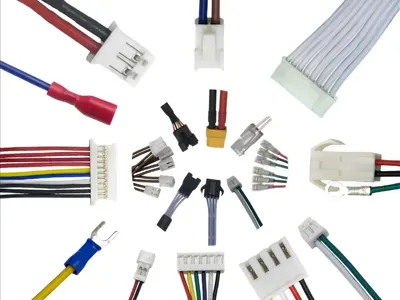
Wanneer jy 'n tekening aan 'n harnasverskaffer stuur, sluit die koppelaarvervaardiger en onderdeelnommer in waar moontlik. As die koppelaar deur klant verskaf word of die onderdeelnommer beperk is, verskaf 'n monster, holte kaart, of beheerde spesifikasie. Dit verminder die risiko dat 'n visueel soortgelyke plaasvervanger die stuk materiaal betree.
Hoe voorkom die BOM en hersieningsbeheer steekproeffoute?
Die materiaallys moet op vier vlakke met die diagram ooreenstem: draad, terminaal, koppelaar, en beskermingsmateriaal. Kontroleer die grootte van die draad, isolasie familie, sny lengte, terminale onderdeelnommer, koppelholtetelling, seëls, knipsels, leiding, etikette, en band. Ontbrekende beskermingsmateriaal skep dikwels 'n pas- of skuurprobleem, selfs wanneer die elektriese toets slaag.
Gebruik een hersiening vir die kwotasie, een goedgekeurde monster, en een produksievrystelling. As ingenieurswese 'n verbindings- of draadspesifikasie verander na monsterneming, die verskaffer moet die geaffekteerde dokumente identifiseer en goedkeuring versoek voordat die verandering aangebring word. Dit is veral belangrik vir motorprogramme wat onder 'n gestruktureerde kwaliteitstelsel soos IATF bestuur word 16949.
Ons fabriek ondersteun produksie volgens monsters en tegniese tekeninge. Vir 'n nuwe projek, stuur die tekeningpakket saam met die beoogde toepassing, jaarlikse hoeveelheid, monster hoeveelheid, omgewingstoestande, en vereiste sertifiseringsdokumente.
Daardie inligting laat die tegniese span 'n ontwerpvraag van 'n kwotasievraag skei. U kan ook die projek met ons vergelyk draadharnas en kabelsamestelling vervaardigingsgids before preparing an RFQ.
Wat is 'n praktiese bedradingstelseldiagram hersiening volgorde?
- Confirm document number, hersiening, eenhede, en vrystellingstatus.
- Trek een stroombaan na van bron tot bestemming en teken elke tak op.
- Pas elke holte by die koppelaansig en pentoewysing.
- Vergelyk die BOM met die draad, terminaal, koppelaar, seël, clip, en beskermingsnotas.
- Kontroleer die fisiese roete vir buiging, beweging, hitte, vog, skuur, and service access.
- Definieer watter toetse en inspeksierekords vereis word voor monstergoedkeuring.
Vir 'n kwaliteit-stelsel verwysing, hersien die Internasionale Motortaakmag hulpbronne wanneer jou projek motor is. Die standaard vervang nie jou produkspesifikasie nie, maar dit help jou span om gekontroleerde prosesse te vra, documented changes, en bewys dat die verskaffer die goedgekeurde ontwerp kan herhaal.
Verskafferouditkontrolelys: 5 Dokumente om aan te vra voor monsterneming
- Beheerde tekening en BOM: bevestig dat die verskaffer die korrekte hersiening en alle beskermingsonderdele aanhaal.
- Connector en terminale datablaaie: verifieer holte-uitleg, retensie, verseëling, draad reeks, en goedgekeurde paringsdele.
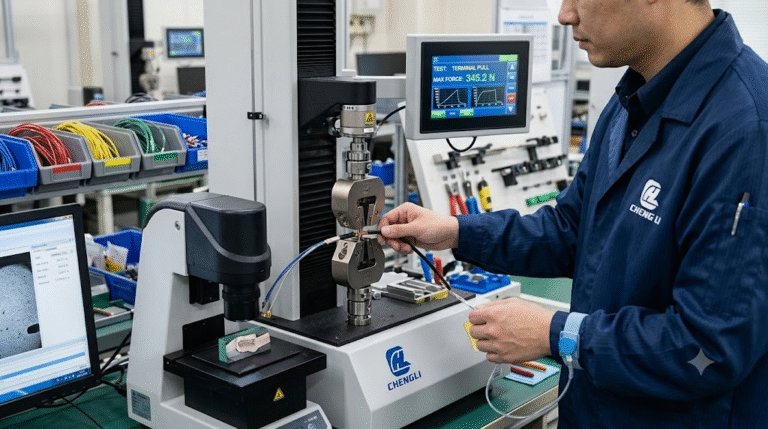
- Voorbeeld inspeksieverslag: kontroleer snylengte, strook lengte, krimp posisie, etikette, tak afmetings, en visuele vakmanskap.
- Elektriese toetsrekord: wys hoe kontinuïteit, kortsluiting, en enige isolasie of diëlektriese toetse word beheer.
- Verander-beheer rekord: bevestig dat vervangings of tekeningveranderings hersiening en goedkeuring vereis.
Vra die verskaffer om die inspeksiemetode en aanvaardingskriteria vir elke dokument te identifiseer. 'n Lêernaam alleen is nie bewys nie; die rekord moet die resultaat aan die onderdeelnommer koppel, hersiening, baie, of monster wat goedgekeur word. Ons verbinding produk kategorie kan ook help wanneer die koppelaarfamilie nog gekies moet word.
Gereelde vrae: Lees tekeninge van bedrading
V: Kan 'n verskaffer 'n harnas bou slegs uit 'n fisiese monster?
Ja, 'n monster kan 'n nuttige beginpunt wees, maar die verskaffer moet nog draad bevestig, terminaal, koppelaar, lengte, beskerming, en aansoekvereistes. By Yueqing Chengli Electronic Technology Co., Ltd., ons aanvaar monsters en tegniese tekeninge vir pasgemaakte harnaswerk. Vra enige verskaffer om te dokumenteer wat gemeet is en watter besonderhede onbevestig bly.
V: Hoekom maak die aansluitingskykrigting saak?
Dieselfde holtenommering kan omgekeerd voorkom as dit van die draadkant of paringskant gesien word. 'n Beheerde gesigaansig voorkom uitsteekfoute. Vra vir die kykrigting en vergelyk dit met die fisiese aansluiting voor afteken.
V: Wat moet nagegaan word wanneer 'n tekeninghersiening verander?
Vergelyk die ou en nuwe BOM, verbindingsholtes, wire specifications, and protection materials, versoek dan 'n nuwe monster of gedokumenteerde goedkeuring wanneer die verandering fiks raak, funksie, or testing. Die verskaffer moet die hersieningsspoor bewaar sodat 'n latere kwaliteitkwessie na die korrekte bou opgespoor kan word.
V: Hoe kan 'n koper kwotasiefoute verminder?
Send the drawing, BOM, monster hoeveelheid, expected volume, toepassing omgewing, verpakking vereistes, en sertifiseringsbehoeftes saam. 'n Verskaffer moet vrae skriftelik terugstuur eerder as om plaasvervangers stilweg te kies. Dit maak prysvergelykings sinvol.
As jy 'n kabelboomdiagram het, BOM, of fisiese monster om te hersien, kontak Yueqing Chengli Electronic Technology Co., Bpk. by chl0002@yqchlidz.com. Jy kan ook 'n pasgemaakte harnas bespreek deur Whatsapp +44 7835 413019.