Wire Harness Terminal Types: 5 Essential Selection Checks
A harness can have the correct wire and still fail because the terminal, lock, Siegel, or crimp interface does not match the application. Understanding wire harness terminal types helps engineers and buyers compare ring, blade, receptacle, stamped, machined, sealed, and high-current interfaces before approving a build. The right choice depends on the electrical load, mating system, Umfeld, assembly method, and service needs.
What Are the Main Wire Harness Terminal Types?
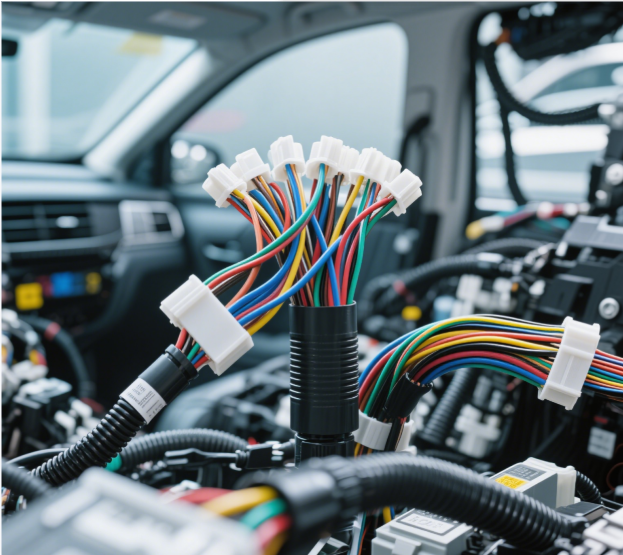
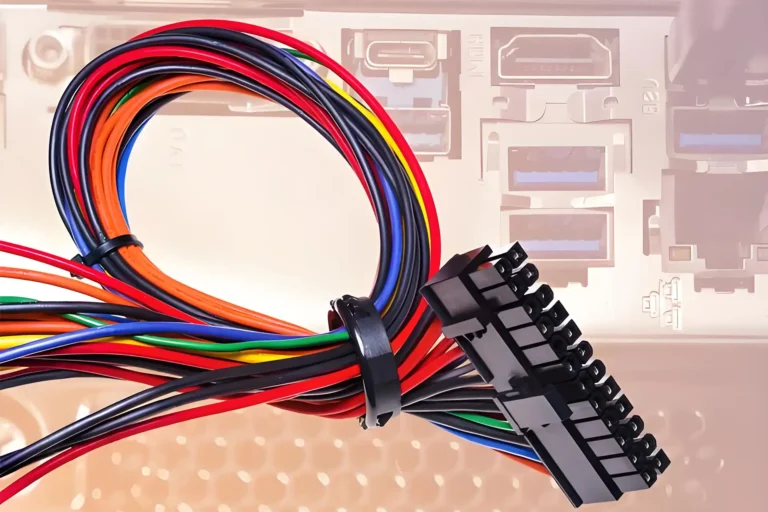
Terminals create the interface between a conductor and a component, Stecker, stud, busbar, or another wire. Common families include ring terminals, fork or spade terminals, blade terminals, receptacle contacts, pin contacts, stamped-and-formed contacts, machined contacts, and terminals designed for sealed connector systems.
The name alone does not determine suitability. Two terminals can look similar while differing in wire range, plating, mating force, crimp barrel, Isolierungsunterstützung, locking feature, temperature capability, or environmental sealing.
Which Factors Decide the Right Terminal?
Start with the interface and the real operating conditions. The terminal must fit the mating component and support the conductor without creating a new mechanical or electrical risk.
- Connection style: Identify stud, blade, pin-and-receptacle, board, splice, or custom interface.
- Current and voltage: Confirm the terminal’s approved electrical range and the application duty cycle.
- Wire compatibility: Match conductor size, strand construction, Isolationsdurchmesser, and crimp barrel.
- Umfeld: Consider vibration, Feuchtigkeit, Temperatur, Chemikalien, Staub, und Servicezugang.
- Locking and retention: Check primary locks, Sekundärschlösser, Siegel, and terminal retention requirements.
For a workmanship reference, Käufer können die konsultieren WHMA-Erklärung zu IPC/WHMA-A-620. The applicable acceptance class and customer specification should be confirmed before a terminal is approved for production.
When Should You Choose Sealed or Unsealed Terminals?
Sealed connector systems are used when the interface must manage exposure to moisture, Staub, Flüssigkeiten, or other environmental conditions defined by the application. They require the correct terminal, wire seal, cavity plug, housing, and assembly process to work together.
An unsealed interface may be suitable for a controlled enclosure or an indoor appliance, but that decision should come from the equipment environment rather than from purchase price alone. Adding a seal to an incompatible terminal does not create a qualified sealing system.
How Do Crimping and Terminal Locks Affect Reliability?
The terminal and crimp tooling must match the conductor and the terminal’s specified application range. A visual check can identify obvious problems, but it cannot replace the inspection and validation method required for the project.
After crimping, check conductor position, Isolierungsunterstützung, terminal deformation, insertion depth, locking, and retention. The connector housing and secondary lock must also be inspected because a correctly crimped terminal can still be incorrectly seated.
- Confirm the terminal part number and approved wire range.
- Confirm applicator or tooling setup and change control.
- Check conductor and insulation crimp areas separately.
- Verify terminal insertion, primary lock, and secondary lock.
- Record the inspection or test result against the part and revision.
How Can a Custom Harness Supplier Support Terminal Selection?
Wenn wir ein maßgeschneidertes Geschirr überprüfen, we confirm the mating component, Kabelspezifikation, current and voltage requirements, Umfeld, sample or drawing, Menge, und Inspektionserwartungen vor der Produktion. This lets our technical team assess the complete terminal-to-housing interface.
Yueqing Chengli Electronic Technology Co., Ltd. liefert maßgeschneiderte Kabelbäume für die Automobilindustrie, Gerät, Neue Energie, und Industriemaschinenanwendungen. Our available company information references ISO 9001, Iatf 16949, Ul, CE, RoHS, und REACH; buyers should confirm the exact documents applicable to their project.
For connector housing and locking decisions, compare our wire harness connector types guide. For the connection map, Überprüfen Sie unsere Leitfaden zur Überprüfung der Pinbelegung des Kabelbaums bevor Sie die Probe genehmigen.
Checkliste für Lieferantenaudits: 5 Terminal Records to Request
- Terminal and housing part numbers: verify the interface and revision.
- Approved wire range: confirms conductor and insulation compatibility.
- Crimp tooling or applicator record: shows how the terminal is assembled and controlled.
- Retention or inspection record: provides evidence that insertion and locking are checked.
- Change and substitution record: documents any replacement terminal and required revalidation.
Wire Harness Terminal Types FAQ
Q: Are stamped terminals and machined terminals interchangeable?
Not automatically. They can differ in dimensions, mating interface, Drahtbereich, current capability, Werkzeuge, and housing compatibility. Confirm the approved part number and application before substitution.
Q: Does a sealed connector always provide better performance?
Not for every installation. Sealing is useful when the environment requires it, but the housing, Terminal, wire seal, and assembly process must be compatible and approved as a system.
Q: What information should I send for terminal selection?
Send the mating component, wire size and insulation, current and voltage, Umfeld, sample or drawing, Menge, und erforderliche Prüfdokumente. Our team can then review the interface and assembly together.
Für einen Brauch wire harness terminal types Rezension, Kontaktieren Sie Yueqing Chengli Electronic Technology Co., Ltd. bei chl0002@yqchlidz.com oder WhatsApp +44 7835 413019.