Menavigasi UL, CSA, dan Kepatuhan CE: Panduan Pengadaan untuk Pembeli Wire Harness Amerika Utara dan UE
Panduan Pengadaan untuk Pembeli Wire Harness Amerika Utara dan UE
Rakitan kabel industri khusus dan sistem pengkabelan adalah sistem saraf mesin modern. Belum, untuk manajer pengadaan dan insinyur desain yang mengimpor komponen ke Amerika Utara dan Uni Eropa, menavigasi kerangka keselamatan internasional selalu menjadi hambatan. Kegagalan untuk mencocokkan spesifikasi teknis dengan mandat peraturan setempat tidak hanya menyebabkan gesekan administratif—hal ini secara langsung memicu penyitaan di bea cukai, kewajiban keuangan yang parah, dan penghentian jalur perakitan yang parah.
Untuk 12 bertahun-tahun, Yueqing Chengli Electronic Technology Co., Ltd. memiliki spesialisasi dalam pembuatan solusi pengkabelan peralatan internal yang menjembatani kesenjangan antara gambar teknik yang rumit dan standar kepatuhan yang ketat. Meminimalkan risiko kepatuhan memerlukan pemahaman yang tepat tentang bagaimana sertifikasi tertentu memengaruhi kinerja wire harness dalam tekanan operasional di dunia nyata.
Realitas Teknis Akses Pasar: Ul, CSA, Dan apa
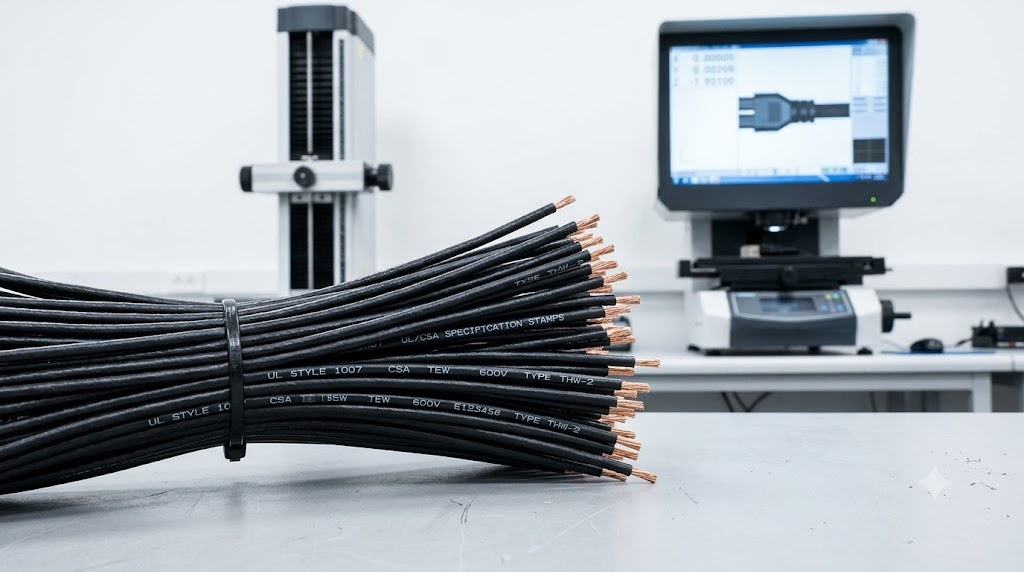
Memasuki pasar Amerika Utara atau Eropa tanpa kepatuhan tingkat komponen yang terverifikasi menjamin kegagalan proyek. Untuk pasar AS dan Kanada, Ul (Laboratorium Penjamin Emisi Efek) Dan CSA (Asosiasi Standar Kanada) standar menentukan sifat keamanan material yang ketat. Ini bukan sekadar lencana administratif; ini adalah definisi empiris tentang kinerja tahan api dan batas isolasi listrik.
Ketika pabrik menentukan gaya yang dikenali UL (seperti UL1007 atau UL1015) untuk harnes kabel internal, ini memastikan bahan insulasi telah lulus uji api vertikal atau horizontal yang ketat (seperti VW-1). Pengujian ini menjamin jika terjadi gangguan listrik internal, isolasi akan padam dengan sendirinya daripada menyalakan api.
+-----------------------------------------------------------------------+
|                       GLOBAL COMPLIANCE MATRIX                         |
+-------------------+--------------------+------------------------------+
| REGION            | MANDATORY MARK     | PRIMARY TECHNICAL FOCUS      |
+-------------------+--------------------+------------------------------+
| United States     | UL Recognition     | Flammability (VW-1), Voltage |
| Canada            | CSA Certification  | Mechanical Shock, Isolation  |
| European Union    | CE / RoHS / REACH  | Eco-Toxicity, Heavy Metals  |
+-------------------+--------------------+------------------------------+
Sebaliknya, Uni Eropa penandaan CE dikombinasikan dengan Rohs (Pembatasan Bahan Berbahaya) Dan MENCAPAI (Pendaftaran, Evaluasi, Otorisasi dan Pembatasan Bahan Kimia) sangat berfokus pada toksisitas lingkungan dan stabilitas kimia. Misalnya, RoHS membatasi penggunaan sepuluh zat berbahaya tertentu, termasuk timah, kadmium, dan difenil eter polibrominasi (PBDE) umumnya digunakan sebagai pemlastis dalam isolasi tingkat rendah. Mendapatkan rangkaian kabel yang melanggar RoHS dapat menyebabkan penarikan produk secara total 27 negara-negara anggota UE.
Untuk menjelajahi opsi inventaris dan teknik material kami yang tersertifikasi sepenuhnya, Anda dapat meninjau kemampuan kami di yueqingchengli.com beranda.
Ilmu Material: Ketahanan Kebakaran dan Integritas Struktural
Delta keuangan antara biaya rendah, rangkaian kawat yang tidak bersertifikat dan rakitan yang sepenuhnya sesuai terletak pada komposisi bahan bakunya. Pabrikan sub-tingkat sering kali mengganti konduktor tembaga murni dengan Aluminium Berlapis Tembaga (CCA) atau gunakan insulasi PVC daur ulang yang terkontaminasi logam berat.
Di bawah beban operasional terus menerus, CCA menunjukkan hambatan listrik yang jauh lebih tinggi daripada murni, tembaga bebas oksigen. Inefisiensi termal ini menyebabkan kenaikan suhu secara lokal secara tajam ($P = Saya^2R$), mempercepat degradasi termal jaket.
Kepatuhan yang tepat menuntut material bersertifikat yang dirancang untuk tekanan lingkungan tertentu:
- Polyethylene Cross-Linked (Xlpe): Sangat direkomendasikan untuk aplikasi energi terbarukan dan tegangan tinggi karena memori termalnya yang unggul dan ketahanan terhadap stress cracking lingkungan.
- Elastomer termoplastik (Tpe) dan Silikon: Penting untuk mesin industri otomatis yang memerlukan fleksibilitas tinggi, ketahanan terhadap minyak, dan selubung operasi termal yang lebar (-40°C hingga +150 °C).
Menggunakan bahan yang tidak memiliki dokumentasi pelacakan formal berisiko terhadap kerusakan insulasi yang tidak dapat diprediksi, sirkuit pendek, dan robekan mekanis ketika disalurkan melalui penutup logam tajam.
Menghilangkan Resiko Kepabeanan dan Kemacetan Rantai Pasokan
Penundaan bea cukai di pelabuhan seperti Los Angeles, Rotterdam, atau Hamburg jarang sekali disebabkan oleh masalah kapasitas logistik—masalah ini disebabkan oleh dokumen yang hilang atau tidak konsisten. Ketika kiriman mesin industri ditahan, petugas bea cukai mencari laporan pengujian yang dapat diverifikasi dan cocok dengan komponen di dalam panel kontrol.
Jika sub-rakitan kelistrikan Anda tidak memiliki riwayat penelusuran yang dapat diverifikasi, kembalilah ke produsen komponen, seluruh pengiriman dapat ditahan tanpa batas waktu. Bermitra dengan eksportir berpengalaman memastikan setiap batch produksi disertai dengan dokumentasi yang komprehensif: lembar data bahan, data analisis penampang crimp, dan log uji kontinuitas listrik.
Untuk mempelajari lebih lanjut tentang mengoptimalkan rantai pasokan Anda dan mengurangi risiko impor, baca panduan operasional terperinci kami di dedikasi kami Repositori sumber B2B.
Apa perbedaan utama antara persyaratan UL dan CE untuk rangkaian kabel industri khusus?
Sertifikasi UL adalah sertifikasi ilmu keselamatan independen yang sangat berfokus pada keselamatan kebakaran, pencegahan sengatan listrik, dan sifat mudah terbakar bahan struktural (MISALNYA., Peringkat api VW-1) di Amerika Utara. Penandaan CE adalah kerangka deklarasi mandiri yang menunjukkan kepatuhan terhadap kesehatan Eropa, keamanan, dan standar perlindungan lingkungan, bekerja secara ketat bersama RoHS dan REACH untuk menghilangkan bahan kimia berbahaya dan logam berat dari siklus hidup produk.
Bagaimana Yueqing Chengli menjamin bahwa kawat pengaman yang diimpor lulus audit bea cukai barat yang ketat??
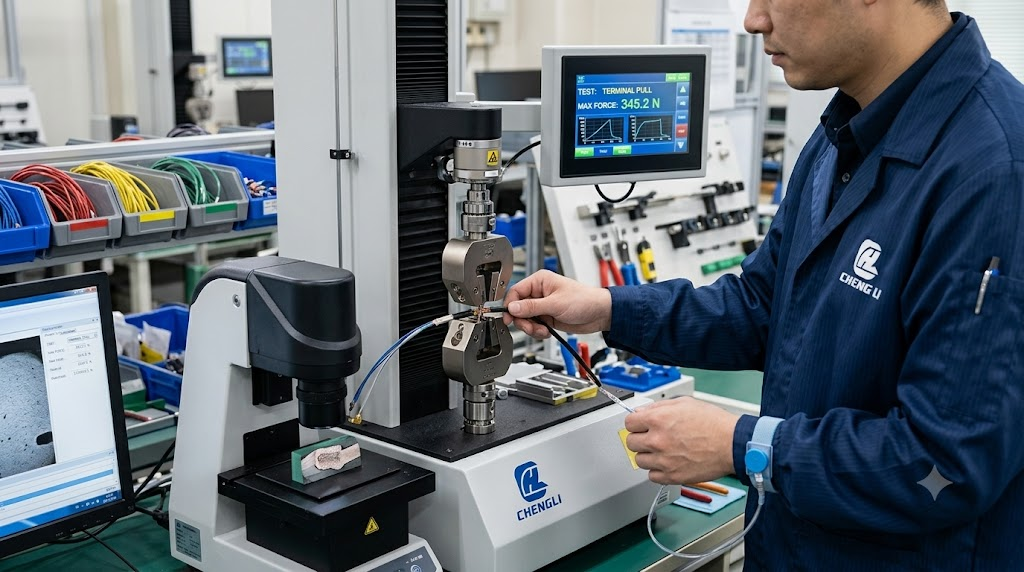
Setiap lot produksi mengalami 100% pengujian kontinuitas listrik otomatis, validasi dimensi terhadap gambar CAD yang disetujui, dan analisis gaya tarik terminal. Kami menyediakan dokumentasi ketertelusuran yang lengkap, termasuk sertifikasi kepatuhan material (Laporan pelacakan RoHS/REACH) dan penanda komponen yang diakui UL pada bahan insulasi yang berlaku, memastikan verifikasi segera di pelabuhan masuk internasional.
Dapatkah wire harness khusus menggunakan konektor yang setara untuk mengurangi biaya tanpa kehilangan kepatuhan?
Ya, menyediakan konektor yang setara (seperti referensi silang terverifikasi untuk Molex, JST, atau Konektivitas TE) cocok atau melampaui peringkat arus listrik komponen asli, spesifikasi nada, dan parameter mudah terbakar. Tim teknik kami melakukan tinjauan teknis secara berdampingan terhadap terminal yang setara untuk memastikan kompatibilitas fungsi penuh tanpa mengorbankan persetujuan akhir tingkat sistem UL atau CE.