Energy Storage Wire Harness: 5 Pemeriksaan Kejuruteraan Kritikal untuk OEM
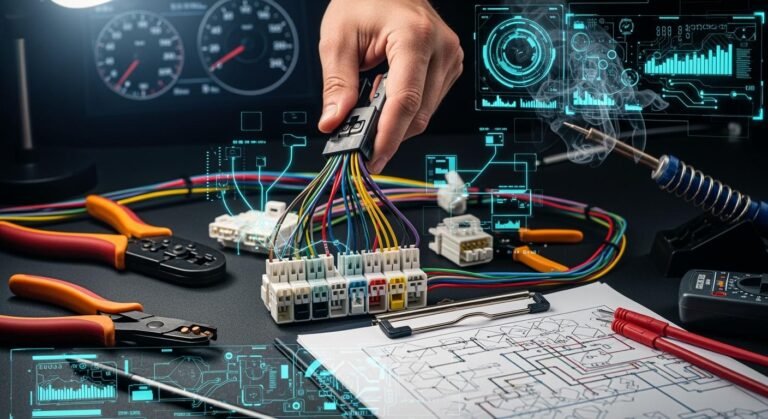
Engineering a dependable energy storage wire harness is paramount for commercial battery energy storage systems (BESS), solar power arrays, and electric vehicle battery packs. When OEM procurement teams overlook continuous current thermal rise or high-voltage insulation degradation, devastating thermal runaway events and costly equipment downtime can occur.
Modern battery energy storage systems operate under severe electrical and environmental stresses, handling continuous DC currents exceeding 250A and system voltages up to 1500V. By integrating heavy-gauge flexible conductors, 360-degree electromagnetic shielding, and robust environmental seals, engineering teams ensure safe power transmission and long-term operating efficiency.
In this technical engineering guide, we examine the five critical design checkpoints required for high-performance energy storage wiring harness assemblies. Following these engineering guidelines protects your battery modules, optimizes thermal management, and ensures full international safety compliance.
Table of Contents
- 1. High-Voltage Conductor Sizing and Continuous Ampacity Calculations
- 2. Thermal Management and Cross-Linked Polymer Insulation Selection
- 3. 360-Degree EMI Shielding and Grounding Ring Termination
- 4. Heavy-Duty Terminal Crimping and Flexible Busbar Integration
- 5. Ingress Protection (IP67/IP69K) and HVIL Safety Interlock Design
- How Yueqing Chengli Manufactures Energy Storage Harnesses
- Senarai Semak Audit Pembekal: 5 Energy Storage Harness Records to Request
- Energy Storage Wire Harness FAQ
1. High-Voltage Conductor Sizing and Continuous Ampacity Calculations
Energy storage battery packs generate continuous high currents during rapid charge and discharge cycles, producing substantial I²R resistive heat. Selecting conductor cross-sections ranging from 25mm² to 120mm² (4 AWG to 4/0 AWG) minimizes resistive power losses and prevents localized overheating inside battery enclosures.
Conductor sizing must also account for maximum permissible voltage drop across interconnected battery racks. Keeping total circuit voltage drop below 1% kepada 2% ensures consistent cell-to-cell balancing and prevents premature inverter low-voltage cutout trips.
For detailed formulas on conductor sizing and copper temperature coefficients, review our wire harness voltage drop guide. Calculating accurate voltage drop ensures that high-current battery interconnects operate with minimal thermal accumulation.
2. Thermal Management and Cross-Linked Polymer Insulation Selection
High-voltage battery cables require advanced insulation compounds capable of withstanding operating temperatures from -40°C to +125°C or +150°C. Cross-linked polyolefin (XLPO) and silicone rubber insulation provide exceptional resistance to thermal aging, dielectric breakdown, and chemical electrolyte exposure.
Silicone insulation provides superior physical flexibility, enabling tight bend radiuses inside cramped battery module racks without kinking copper strands. Distinctive high-voltage safety orange jackets (RAL 2003) immediately alert maintenance technicians to hazardous DC potentials.
To evaluate insulation dielectric properties under high voltage, explore our comprehensive wire harness insulation resistance test guide. Performing automated 1000V DC insulation resistance testing verifies that cable jackets remain completely free from pinholes or extrusion micro-voids.

3. 360-Degree EMI Shielding and Grounding Ring Termination
High-frequency switching transients from power conversion systems (PCS) and bidirectional inverters generate substantial electromagnetic noise along DC power lines. Without proper shielding, high-voltage switching spikes can disrupt sensitive Battery Management System (BMS) voltage and temperature sensing circuits.
Dual-layer shielding combining tinned copper braid with aluminum-mylar foil delivers over 85% kepada 95% optical coverage and superior high-frequency attenuation. Terminating the shielding braid with 360-degree aluminum crimp rings directly to the connector metal shell establishes low-impedance grounding paths.
For international quality and assembly benchmarks, manufacturing teams align processes with the ISO 9001 quality management framework. Standardized production control ensures repeatable shield crimping and electrical bonding across all manufactured high-voltage assemblies.
4. Heavy-Duty Terminal Crimping and Flexible Busbar Integration
Terminating heavy-gauge conductors demands precision hydraulic crimping tools that achieve gas-tight compaction between copper strands and heavy-duty ring terminals. Symmetrical hexagonal or B-crimp geometries eliminate microscopic air gaps, preventing terminal oxidation and thermal runaway under continuous 300A loads.
In high-density battery packs, flexible insulated copper busbars are often integrated alongside wire harnesses to accommodate thermal expansion and cell breathing. Electro-tin or nickel plating on copper mating surfaces prevents galvanic corrosion across long service lifespans.
To compare different terminal styles and tooling requirements, consult our open barrel vs closed barrel terminals guide. Selecting heavy-duty closed-barrel lug terminals ensures superior mechanical pull-off strength and low millivolt contact resistance.
5. Ingress Protection (IP67/IP69K) and HVIL Safety Interlock Design
Outdoor utility-scale energy storage containers are subject to extreme temperature swings, humidity condensation, and wind-driven rain. High-voltage power connectors must incorporate perimeter silicone seals and individual wire seals to achieve certified IP67 or IP69K ingress protection ratings.
High-Voltage Interlock Loop (HVIL) circuits provide an essential safety layer by monitoring physical connector mating integrity in real time. If a connector begins backing out during operation, the HVIL circuit opens milliseconds before main power pins separate, triggering an immediate BMS high-voltage relay disconnect.
For deep technical insights on automotive and energy storage sealing, explore our automotive harness connector sealing guide. Combining dual-locking CPA mechanisms with silicone seals guarantees leak-proof performance under severe outdoor operating conditions.
How Yueqing Chengli Manufactures Energy Storage Harnesses
At Yueqing Chengli Electronic Technology Co., Ltd., we specialize in manufacturing custom high-voltage wire harnesses and BMS interconnects for the global energy storage market. Our facility features heavy-duty automated wire stripping and hydraulic crimping equipment capable of processing cable sizes up to 120mm².
Our manufacturing facility produces custom wiring harnesses for new energy, automotif, home appliance, and industrial machinery sectors. We maintain strict quality management systems certified to ISO 9001 dan IATF 16949, backed by UL, CE, RoHS, and REACH international standards.
Every energy storage harness undergoes 100% computerized electrical testing, including micro-ohm contact resistance verification and high-voltage dielectric withstand testing up to 5000V DC. Our engineering team collaborates closely with BESS system designers to optimize cable routing and terminal configurations.
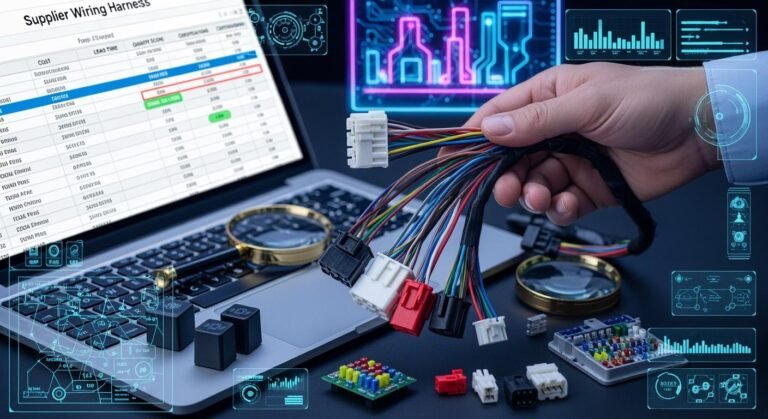
Senarai Semak Audit Pembekal: 5 Energy Storage Harness Records to Request
- High-voltage cable technical specification sheet: confirms 1000V/1500V DC rating, XLPO/silicone compound type, and UL 3820/UL 758 listing.
- Terminal crimp pull-force and micro-ohmmeter test report: validates gas-tight crimp compaction and contact resistance below specified milliohm limits.
- Dielectric withstand (Hypot) and insulation resistance test log: verifies 100% testing up to 3000V-5000V DC without breakdown or leakage current.
- IP67 / IP69K waterproof and pressure decay air leak certificate: confirms hermetic seal retention across all mated high-voltage power connectors.
- RoHS and REACH material declaration: ensures heavy-metal-free construction and certified flame retardance compliant with UL 94 V-0 piawaian.
Energy Storage Wire Harness FAQ
Q: What cable insulation is best suited for energy storage battery harnesses?
Cross-linked polyolefin (XLPO) and high-tear silicone rubber are the most popular choices, providing exceptional thermal resistance up to 125°C-150°C and superior dielectric strength under continuous high-voltage loads.
Q: Why is HVIL integration essential in high-voltage energy storage systems?
High-Voltage Interlock Loop (HVIL) circuits monitor physical connector mating, automatically opening high-voltage contactors before power pins disconnect to prevent dangerous electrical arcing.
Q: How does Yueqing Chengli ensure high-voltage safety on custom orders?
We conduct 100% digital electrical testing on every assembly, verifying high-potential dielectric withstand, point-to-point continuity, and low contact resistance before dispatch.
To request custom energy storage wire harness prototypes or discuss your BESS project requirements, reach out to our engineering team at chl0002@yqchlidz.com. We provide comprehensive DFM assistance, custom tooling support, and volume manufacturing to accelerate your energy storage product deployment.