Wire Harness Crimping Process: 5 Critical Checks for Reliable Assembly
If a harness passes a quick continuity check but fails after installation, the crimp is often the first place to investigate. A reliable wire harness crimping process controls the relationship between the conductor, terminal, insulation support, tooling, and inspection record. The goal is not simply to make a wire look attached; it is to create a repeatable electrical and mechanical connection for the actual application.
Why Does the Wire Harness Crimping Process Matter?
A crimped termination carries current through a compressed contact zone. If the terminal is under-crimped, strands may move inside the barrel and increase resistance. If it is over-crimped, the conductor can be damaged or the terminal can lose its intended geometry.
In our manufacturing practice, the correct result depends on the wire size, terminal design, insulation diameter, applicator, and approved setup. A supplier should therefore control the complete process rather than judge quality from appearance alone.
What Are the Main Stages of a Controlled Crimping Process?
A practical wire harness crimping process begins before the machine cycles. The operator confirms the drawing revision, terminal part number, conductor cross-section, strip length, and the correct applicator or die set.
- Wire preparation: Cut and strip the conductor without nicking strands or leaving excessive insulation damage.
- Terminal positioning: Place the terminal so the conductor barrel and insulation support align with the tooling.
- Crimp formation: Apply the approved tooling setup with controlled machine parameters.
- Inspection: Check the crimp geometry, conductor brush, insulation support, terminal position, and traceability record.
For acceptance criteria, buyers can consult the WHMA overview of IPC/WHMA-A-620. The applicable class and customer specification still need to be confirmed for each project. You can also compare our approach with the wire harness and cable assembly manufacturing guide.
Which Inspection Checks Should Buyers Request?
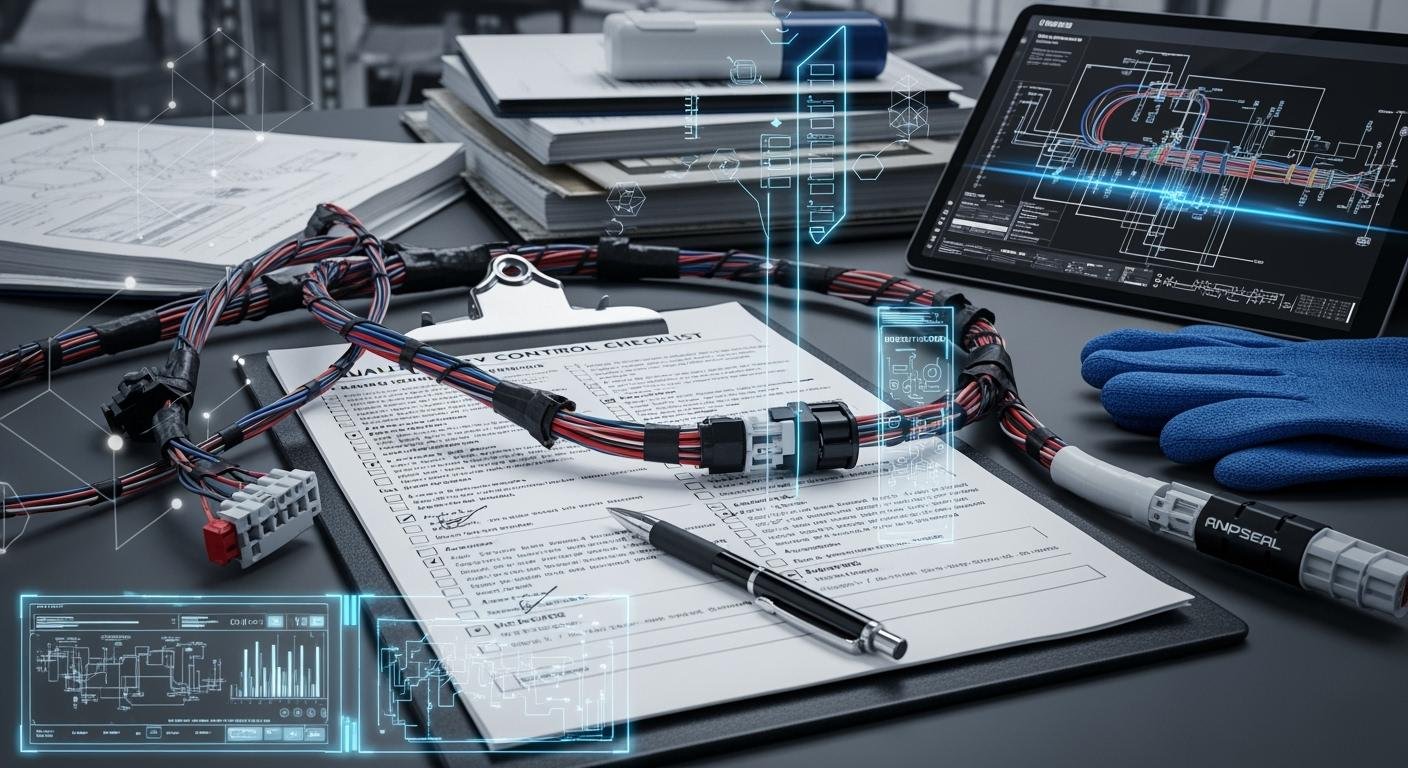
Visual inspection is useful, but it cannot prove every property of a crimp. Ask the supplier to connect each inspection to the part number, drawing revision, sample, or production lot being approved.
- Crimp height and width: Confirms that the terminal was formed within the approved setup range.
- Conductor brush and bellmouth: Shows whether the stripped conductor is positioned correctly.
- Insulation support: Confirms that the insulation is supported without being cut by the conductor barrel.
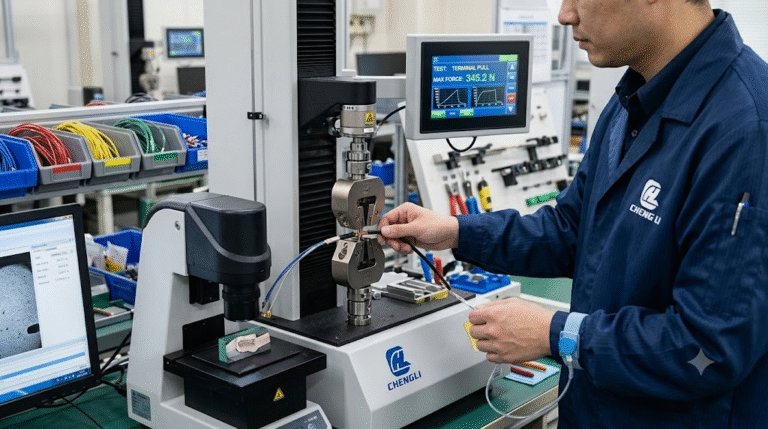
- Pull-force evidence: Verifies mechanical retention when the customer specification calls for it.
- Electrical verification: Continuity and, where specified, insulation or dielectric tests provide additional evidence.
What Common Crimping Errors Should You Prevent?
Wrong terminal selection, incorrect strip length, mixed tooling, and loose revision control are frequent causes of avoidable rework. A terminal can appear visually acceptable while the conductor is too short, the insulation is inside the conductive barrel, or the strands have been damaged.
When we prepare a custom harness from a sample or technical drawing, we recommend confirming the application, wire specification, connector family, environmental conditions, and inspection expectations before quoting. This gives the technical team a controlled basis for the build. For pin assignment checks, use our wire harness pinout review guide before approving the sample.
Supplier Audit Checklist: 5 Documents to Request Before Approval
- Approved drawing and revision record: verifies that production uses the current design.
- Terminal and wire material list: confirms the components selected for the application.
- Crimp setup or first-article record: shows how the tooling and sample were approved.
- Inspection report sample: connects measured results to a part number or lot.
- Corrective-action record when applicable: shows how a nonconforming crimp is contained and prevented from recurring.
Wire Harness Crimping Process FAQ
Q: Can visual inspection alone confirm a good crimp?
No. Visual checks can identify obvious positioning or damage problems, but the required dimensional and mechanical checks depend on the terminal, wire, and customer specification. Ask any supplier which acceptance criteria and records apply to your part.
Q: Why can a crimp pass continuity but fail in service?
Continuity only confirms that an electrical path exists at the time of the test. Mechanical retention, conductor damage, vibration, moisture, and an incorrect terminal may require additional inspection or validation. Request evidence matched to the application rather than a generic test statement.
Q: What information should I send for a custom harness quote?
Send the drawing or sample, wire and terminal information, connector details, application environment, quantity, and required inspection or certification documents. At Yueqing Chengli Electronic Technology Co., Ltd., this information helps our technical team assess the build before discussing production.
For a controlled wire harness crimping process review, contact Yueqing Chengli Electronic Technology Co., Ltd. at chl0002@yqchlidz.com or WhatsApp +44 7835 413019.