Appliance Wiring Material UL 758: 5 Essential Compliance Checks

Selecting compliant appliance wiring material UL 758 is essential for home appliance and industrial equipment manufacturers seeking global market access. When OEM procurement teams specify improper Appliance Wiring Material (AWM) style numbers or insulation ratings, severe thermal degradation and certification rejections can compromise entire product lines.
The UL 758 standard governs thousands of specialized single-conductor and multi-conductor wire styles engineered for internal wiring of electrical appliances. By carefully evaluating voltage ratings, continuous operating temperatures, and flammability classifications, engineering buyers ensure safe and code-compliant wire harness assemblies.
In this engineering guide, we examine the five essential compliance checks required when sourcing UL 758 AWM wire harnesses. Applying these technical criteria prevents premature insulation embrittlement, eliminates regulatory audit delays, and guarantees robust electrical performance.
Table of Contents
- 1. Decoding UL AWM Style Numbers and Construction Categories
- 2. Thermal Classifications and Operating Voltage Margins
- 3. Insulation Polymer Selection: PVC, XLPE, and Silicone
- 4. Flammability Standards: VW-1 and FT1 Flame Test Verification
- 5. Surface Marking Traceability and UL File Number Verification
- How Yueqing Chengli Ensures UL 758 Pematuhan
- Senarai Semak Audit Pembekal: 5 UL 758 Records to Request
- Appliance Wiring Material UL 758 Soalan Lazim
1. Decoding UL AWM Style Numbers and Construction Categories
The UL 758 standard assigns specific four-digit and five-digit style page numbers that define precise conductor constructions and insulation thicknesses. The leading digit of each UL style number designates the fundamental construction type, distinguishing single-conductor wires from multi-conductor jacketed cables.
Contohnya, 1000-series styles (seperti UL 1007 dan UL 1015) designate single-conductor thermoplastic-insulated hook-up wires widely used in consumer white goods. In contrast, 2000-series styles represent multi-conductor cables with external extruded thermoplastic jackets designed for external appliance interconnects.
To ensure conductor compatibility with current loads and voltage drop limitations, explore our comprehensive wire harness wire gauge selection guide. Selecting the correct style number ensures the conductor possesses the exact mechanical wall thickness required for your enclosure geometry.
2. Thermal Classifications and Operating Voltage Margins
Appliance wiring materials operate under strict continuous temperature limits established by UL testing protocols. Standard general-purpose PVC styles (like UL 1007) are rated for 80°C or 105°C, making them ideal for low-heat control panels and general appliance electronics.
High-heat appliances such as ovens, coffee makers, and commercial dishwashers demand higher thermal thresholds, requiring 125°C XLPE or 150°C to 200°C silicone insulation. Operating voltage ratings must also be matched, ensuring 300V or 600V dielectric ratings provide safe clearance margins above line voltages.
For detailed calculations on conductor resistance and thermal dissipation under load, review our wire harness voltage drop guide. Ensuring adequate thermal headroom prevents thermal aging and insulation hardening over the operating lifespan of the appliance.
3. Insulation Polymer Selection: PVC, XLPE, and Silicone
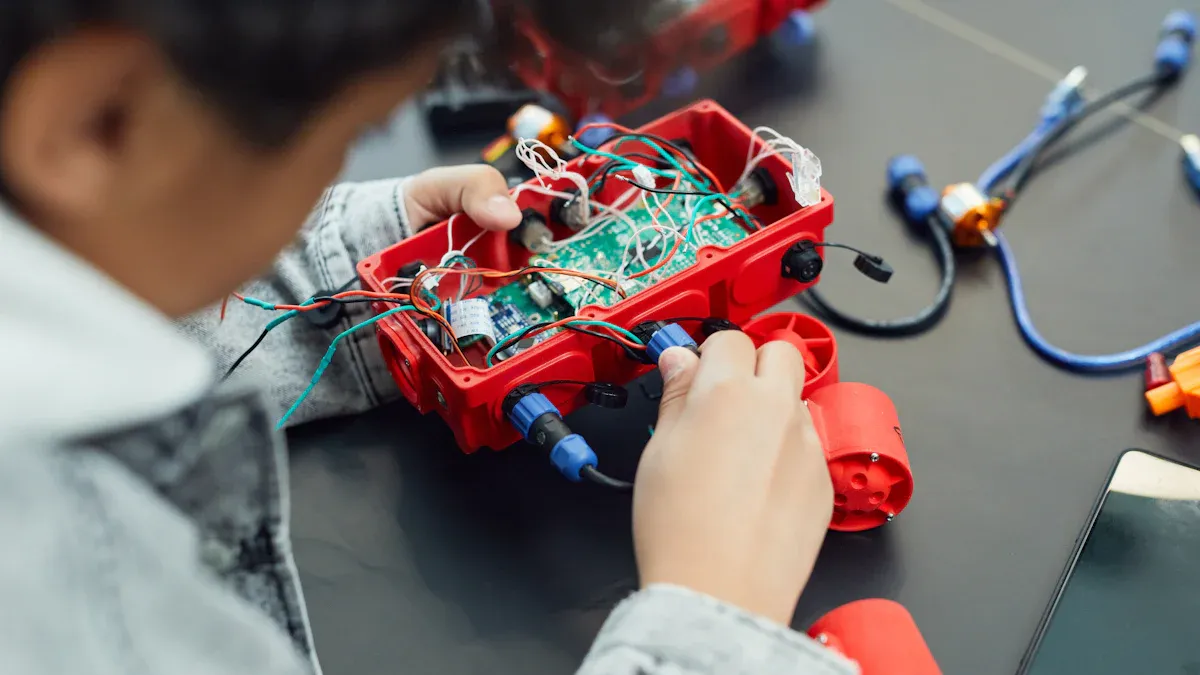
Selecting the optimal insulation compound dictates both electrical reliability and manufacturing efficiency during terminal crimping operations. Extruded PVC provides excellent flexibility and cost-effectiveness for room-temperature harnesses but exhibits limited resistance to aggressive industrial solvents and extreme thermal spikes.
Polietilena bersilang (XLPE) offers superior cut-through resistance, allowing thinner insulation walls that significantly reduce overall wiring harness bundle diameters. For ultra-high temperature zones and dynamic flexing applications, silicone rubber insulation maintains mechanical elasticity without cracking across extreme thermal ranges.
To understand how terminal tooling interfaces with different insulation compounds, consult our open barrel vs closed barrel terminals guide. Matching wire insulation hardness with proper crimping applicators ensures gas-tight terminal termination without damaging inner copper strands.
For official testing standards and certification protocols, engineering teams can consult the UL Solutions AWM testing and certification guide. This authoritative resource outlines specific physical, thermal, and electrical performance tests required for full UL 758 pematuhan.
4. Flammability Standards: VW-1 and FT1 Flame Test Verification
Flammability testing is a critical safety pillar of appliance wiring material compliance, preventing internal wiring from propagating electrical fires. The vertical wire flame test (UL VW-1) requires that a vertically oriented sample self-extinguish within 60 seconds after repeated open flame applications.
Tambahan pula, the burning conductor must not emit flaming droplets or particles capable of igniting surgical cotton placed directly beneath the test specimen. Canadian standard equivalents, such as CSA FT1, enforce similar vertical burn criteria to ensure North American market compliance across all finished assemblies.
For multi-branch assemblies with secondary protective coverings, review our wire harness strain relief guide. Combining flame-retardant AWM wire with UL 94 V-0 braided sleeving ensures maximum fire protection in enclosed appliance chassis.
5. Surface Marking Traceability and UL File Number Verification
Authentic UL 758 compliant wire must carry permanent surface legend markings or printed spool tags identifying the wire manufacturer’s assigned UL File Number (E-file). This continuous surface print includes the recognized component mark, temperature rating, voltage rating, AWG gauge size, and flame rating.
Quality inspectors must verify these legend markings against the online UL Product iQ database to confirm that the supplier’s active listing covers the delivered style number. Unmarked generic wires lacking verifiable file numbers risk immediate failure during OEM factory audits and third-party NRTL field inspections.
For complete quality management workflows, explore our wire harness quality inspection guide. Verifying raw material markings during incoming receiving inspection ensures uncompromised quality across your entire supply chain.
How Yueqing Chengli Ensures UL 758 Pematuhan
At Yueqing Chengli Electronic Technology Co., Ltd., we manufacture custom wiring harnesses using 100% genuine UL 758 recognized appliance wiring materials. Our engineering staff verifies style page specifications and conductor properties before initiating production tooling setup.
Our manufacturing facility produces custom wiring harnesses for home appliance, automotif, new energy, and industrial machinery sectors. We maintain strict quality management systems certified to ISO 9001 dan IATF 16949, backed by UL, CE, RoHS, and REACH international standards.
Every delivered production lot is accompanied by raw material mill test certificates and traceable UL file documentation. Our technical team works directly with your engineering department to recommend optimized AWM styles that balance thermal performance with cost efficiency.
Senarai Semak Audit Pembekal: 5 UL 758 Records to Request
- UL Style Page specification sheet: confirms conductor stranding, insulation wall thickness, voltan, and temperature ratings.
- Wire manufacturer UL File Number (E-file) active listing: verifies current certification status in the UL Product iQ database.
- VW-1 / FT1 vertical flame test certificate: demonstrates certified flame resistance and absence of flaming dripping particles.
- Conductor material purity and RoHS/REACH compliance declaration: validates heavy-metal-free construction and electrolytic copper purity.
- Automated electrical test certificate: confirms 100% dielectric withstand and circuit continuity for all processed harness assemblies.
Appliance Wiring Material UL 758 Soalan Lazim
Q: What is the primary difference between UL 1007 dan UL 1015 appliance wiring materials?
While both styles utilize PVC insulation, UL 1007 features a thinner insulation wall rated for 300V, whereas UL 1015 features a heavier insulation jacket rated for 600V operation.
Q: Can UL 758 AWM wire be used for external building wiring?
Tidak. Appliance Wiring Material is specifically tested and recognized for internal appliance factory wiring and equipment interconnects, not for permanent building branch circuits governed by the National Electrical Code.
Q: How does Yueqing Chengli assist OEMs in selecting the right AWM style?
When you provide your appliance operating voltage, maximum internal ambient temperature, and mechanical routing requirements, our engineering team selects the exact UL style number to ensure full regulatory compliance.
To request custom quotes or evaluate compliant appliance wiring material UL 758 harnesses for your next production run, reach out to our engineering team at chl0002@yqchlidz.com. Our technical specialists review your operating voltages and thermal profiles to ensure complete regulatory compliance.