
Bộ dây khai thác khoang động cơ: Thiết kế Underhood nhiệt độ cao
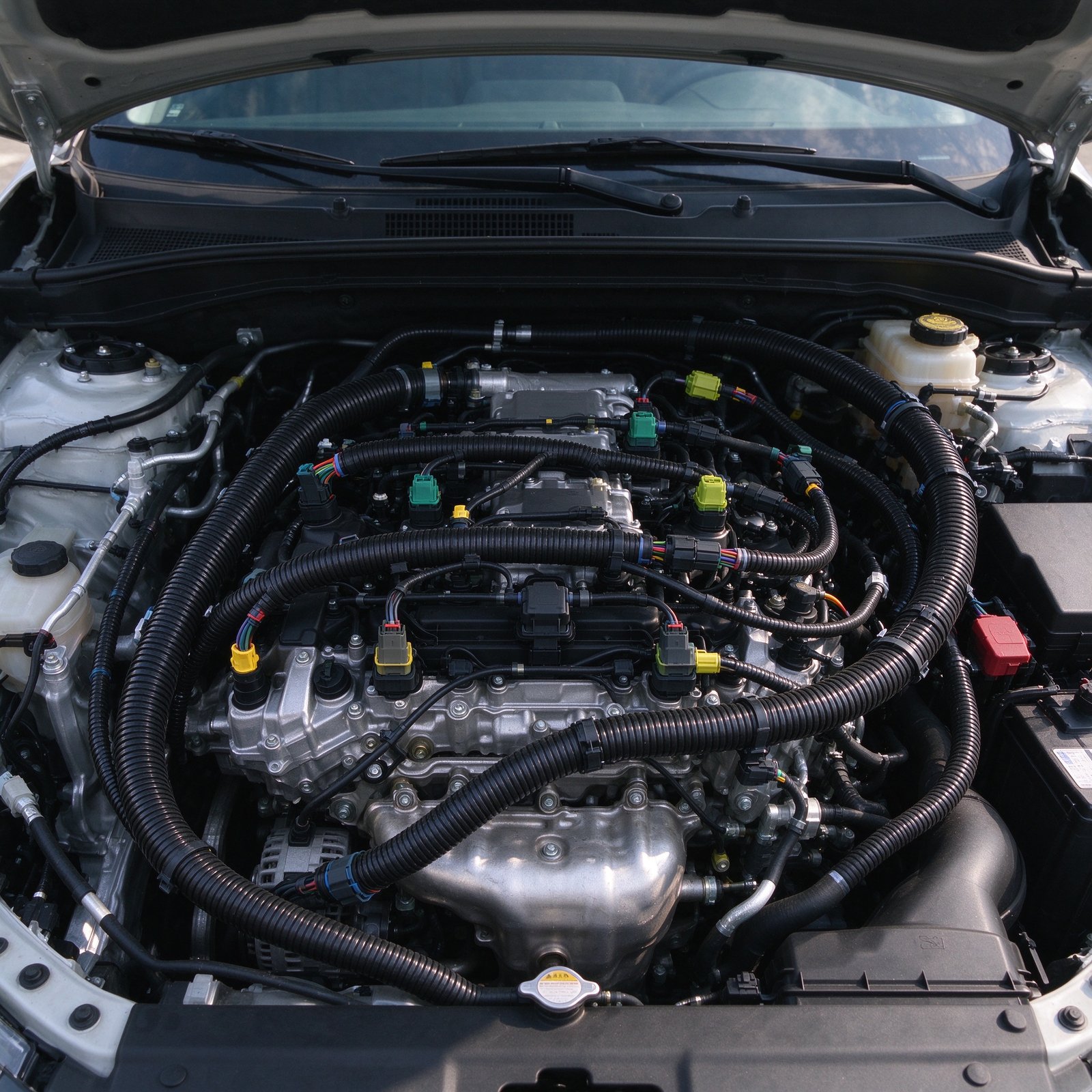
Khoang động cơ là môi trường khắc nghiệt nhất mà bộ dây điện nhìn thấy: chu kỳ nhiệt duy trì, dầu, chất làm mát, muối đường, rung động và tiếp xúc chặt chẽ với các bộ phận ống xả và turbo. MỘT engine compartment wire harness is engineered for that environment from the conductor up — conductor grade, cách nhiệt, tie-downs, connector sealing and routing all change compared to a cabin or door harness.
This guide explains what underhood engineering requires, how harness designers specify high-temperature components, and what buyers should verify with an automotive wire harness manufacturer.
The Underhood Environment, Quantified
A production engine bay exposes a harness to:
– Continuous ambient temperatures of 125–150 °C near the engine and turbocharger
– Short-duration peaks above 175 °C near exhaust components
– Engine oil, transmission fluid, coolant and road chemicals
– Vibration across a broad frequency range from idle to redline
– Độ ẩm, road salt and splash water
A cabin harness rated at 85 °C will fail quickly in this environment. Every contact point must be re-specified.
Conductor and Insulation Selection
Underhood harnesses move up the temperature ladder:
| Thành phần | Cabin harness | Underhood harness |
| dây dẫn | Standard copper | Standard or tinned copper |
| Cách nhiệt | PVC / XLPE | XLPE, silicon, PTFE |
| Continuous rating | 80–105 °C | 125–175 °C |
| Bảo vệ mài mòn | Basic conduit | Corrugated PA or braided sleeve |
| Oil resistance | Not specified | Tested to oil and coolant immersion |
Polyetylen liên kết ngang (XLPE) and silicone-insulated wires are the default near the engine; PTFE for the hottest zones. Tinned conductors resist corrosion from oil and moisture.
Connector and Sealing
Underhood connectors must survive wet and dirty conditions:
– Đầu nối kín (IP67/IP6K9K) with silicone or EPDM seals
– Đảm bảo vị trí thiết bị đầu cuối (TPA) to prevent terminal backs-out from vibration
– Connector CPA (connector position assurance) to confirm full mating
– Secondary lock on critical circuits
– Corrosion-plated terminals (tin or gold over nickel)
A single unsealed connector in a wet zone causes intermittent electrical faults that are nearly impossible to diagnose in the field.
Routing and Retention
Underhood harness routing is engineered around heat sources:
– Harness routed away from exhaust pipes and turbo outlets, or shielded with heat-wrap
– Securely clipped every 150–300 mm to prevent vibration fatigue
– Grommets where the harness passes through metal panels
– Service loops designed so the harness can be removed without cutting
– Ground points isolated from dissimilar metal corrosion
Vibration fatigue usually starts where the harness is under strain or routed too close to a vibrating surface.
Common Failure Points
– Heat-aged insulation cracking near the turbo

– Sealed connectors losing seal after thermal cycling
– Corroded terminals from water intrusion
– Conductor fatigue at tie-down points
– Harness contact with hot exhaust causing insulation melt
Testing an Underhood Harness
Before sign-off, an underhood harness should pass:
– Temperature cycling (−40 to 150 °C)
– Vibration test on all circuits
– Thermal shock
– Oil and coolant immersion
– Salt spray
– Ingress (water spray)
– Điện: sự liên tục, điện trở cách điện, sụt áp
Danh sách kiểm tra kiểm tra nhà cung cấp
1. Does the manufacturer have experience with engine compartment harnesses (not just cabin harnesses)?
2. What wire insulation grades do they use for 125 °C and 175 °C zones?
3. Are connectors sealed to IP67 / IP6K9K, and which connector families do they use?
4. Can they provide thermal cycling and vibration test reports?
5. How do they design routing around heat sources?
6. What is their crimp quality control (cross-section analysis on samples)?
7. Do they support IATF 16949 production and PPAP documentation?
8. Can they build to OEM-specific underhood specifications?
Câu hỏi thường gặp
Q: What temperature rating do I need for an engine harness?
MỘT: Near the engine, specify 125 °C continuous; near the turbo or exhaust, 150–175 °C. Always specify by location, not a single rating.
Q: Can I use a cabin harness in the engine bay?
MỘT: KHÔNG. Cabin harnesses are rated for 80–105 °C and are not sealed against oil, coolant or water. They will fail within months.
Q: Are sealed connectors required on all underhood circuits?
MỘT: Connectors in wet or dirty zones require sealing. Some dry zones near the engine may use unsealed connectors, but the routing decision must be deliberate.
Q: How long should an underhood harness last?
MỘT: A properly specified underhood harness should match the vehicle service life, typically 10–15 years, with no electrical failures.
Liên hệ với chúng tôi
For an engine compartment harness built to your temperature and sealing requirements, send us your ứng dụng, temperature zones, connector preference and target volume. We will return a design proposal with component list and test plan. Reach us through the contact page or WhatsApp.